Archives: Sections
Download documents
Download documents
Download documents
Download documents
Annex 1 – List of Acronyms, Definitions and Verbal Forms used
Acronym List
| AB | Accreditation Body |
| Afi | Accountability Framework initiative |
| ASC | Aquaculture Stewardship Council |
| ASI | Assurance Services International |
| CAB | Conformity Assessment Body |
| CAR | Certification and Accreditation Requirements |
| CASS | Conservation Alliance for Seafood Solutions |
| CITES | Convention on International Trade in Endangered Species of Wild Fauna and Flora |
| CoCCC | Chain of CustodyCode of Conduct |
| D/C | Deforestation and Conversion |
| DD | Due Diligence |
| EL | Entry Level |
| EEMP | Energy Efficiency Management Plan |
| EMP | Effluent Management Plan |
| EU | European Union |
| FAO | UN Food and Agriculture Organization |
| FIP | Fishery Improvement Project |
| FPIC | Free, Prior and Informed Consent |
| GDP | Gross Domestic Product |
| GHG | Greenhouse Gas |
| GM / GMO | Genetically Modified / Genetically Modified Organism |
| ILO | International Labour Organization |
| IPCC | Intergovernmental Panel on Climate Change |
| ISEAL | International Social and Environmental Accreditation and Labelling (Alliance) |
| IUCN | International Union for Conservation of Nature |
| LLAIMMJML | Logo Licence AgreementIngredient Manufacturermegajoulesmegalitres |
| MSCMSL | Marine Stewardship CouncilMajority Sustainability Level |
| NGO | Non-Governmental Organisation |
| OHCHR | Office of the High Commissioner for Human Rights |
| PDCA | Plan-Do-Check-Act |
| PPE | Personal Protective Equipment |
| RUoC | Requirements for the Unit of Certification |
| SDG | UN Sustainable Development Goal |
| t | Tonne (1,000 kg) |
| ToC | Theory of Change |
| UN | United Nations |
| UDHR | Universal Declaration of Human Rights |
| UoC | Unit of Certification |
| WCEP | Water Conservation and Efficiency Plan |
| WMP | Waste Management Plan |
Definition List
The definitions applicable to this Standard can be accessed through the ASC Vocabulary Portal.
Annex 2 – Environmental Impacts by the Feed Manufacturer
Section A1 Water consumption calculation
Water and consumption shall be calculated as follows:
| Water consumption – indicator 1.18.2: | |
| 1 | Identify the year the calculation relates to. This is set as the previous calendar year (1 January – 31 December). |
| 2 | Calculate the total production volume of product (t) within the defined time-period (step 1). |
| 3 | List all sources of water, separated into the categories “freshwater” and “other water”[184], used during the production process, from ingredient receiving to final product dispatch
|
| 4 | Calculate the quantity of water used[186] (megalitres) per water source (step 3) within the set time period (step 1). |
| 5 | Sum the quantities of water used (step 4). |
| 6 | Calculate the total water use (step 5) per total product produced/year (step 2) and express in megalitres/t. |
| 7 | Report the results of steps 4, 5 and 6 to ASC via data@asc-aqua.org, using the template provided on the ASC website. |
Section A2 Effluent discharge calculation
Effluent discharge shall be calculated as follows:
| Effluent discharge – indicator 1.20.2: | |
| 1 | Identify the year the calculation relates to. This is set as the previous calendar year (1 January – 31 December). |
| 2 | List all effluent by destination, separated into the categories “freshwater” and “other water”, generated during the production process, from ingredient receiving to final product dispatch:
|
| 3 | Calculate the quantity of effluent discharged (megalitres) per destination (step 2) within the set time period (step 1). |
| 4 | Sum the quantities of effluent discharged (step 3). |
| 5 | Report the results of steps 3 and 4 to ASC via data@asc-aqua.org, using the template provided on the ASC website. |
Section A3 Energy consumption calculation
Energy consumption shall be calculated as follows:
| Energy consumption – indicator 1.21.2: | |
| 1 | Identify the year the calculation relates to. This is set as the previous calendar year (1 January – 31 December). |
| 2 | Calculate the total production volume of product (t) within the defined time period (step 1). |
| 3 | List all sources of energy used during the production process, from ingredient receiving to final product dispatch: Scope 1—on-site consumption of energy carriers, including:
|
| 4 | Calculate the quantity used per energy source (step 3) within the set time period (step 1). |
| 5 | Convert[188] the quantities used (step 4) to MJ and sum the totals. |
| 6 | Calculate the total energy use in MJ (step 5) per tonne of product produced in the assessment year (step 2). |
| 7 | Report the results of steps 4, 5 and 6 to ASC via data@asc-aqua.org, using the template provided on the ASC website. |
Section A4 Waste consumption calculation
Waste consumption shall be calculated as follows:
| Waste consumption – indicator 1.19.2: | |
| 1 | Identify the year the calculation relates to. This is set as the previous calendar year (1 January – 31 December). |
| 2 | List the composition of waste by destination, separated into hazardous and non-hazardous waste, generated during the production process, from ingredient to receiving to final product dispatch:
|
| 3 | Calculate the quantity of waste generated (tonne) per destination (step 2) within the set time period (step 1). |
| 4 | Sum the quantities of waste generated (step 3). |
| 5 | Report the results of steps 2, 3 and 4 to ASC via data@asc-aqua.org, using the template provided on the ASC website. |
Section B GHG Emission calculation – indicator 1.21.4
For the purposes of estimating GHG emissions associated with aquafeeds, calculations shall include the following inputs within each of the emissions scopes defined by the Greenhouse Gas Protocol[1]:
- Scope 1—emissions from the on-site consumption of energy carriers (diesel, petrol/gasoline, natural gas) as quantified in Section A3.
- Scope 2—emissions associated with the purchase of electricity and other off-site energy generation (e.g. district heating) as quantified in Section A3.
- Scope 3—emissions associated with the production, processing, and transport of ingredients from crop, fishery, poultry/livestock, and other raw material sources.
GHG emissions shall be calculated as follows:
- List inputs to feed production, including those energy inputs included in Section A3 as well as any feed ingredients that make up at least 1% of the average raw material feed composition.
- Calculate the quantity of each input used in the production of one tonne of feed in the previous calendar year (1 January – 31 December).
- Determine and record appropriate emission factors and their sources, communicated in kg CO2-equivalent units, for each input listed in step 1. See further details below.
- Multiply the quantity of each input from step 2 by the respective emission factor in step 3 to calculate the total emissions from each input associated with one tonne of feed.
- Sum the total emissions associated with one tonne of feed in kg CO2-eq units.
- Report results from 2, 3, 4, and 5 to ASC via data@asc-aqua.org, using the template provided on the ASC website.
Determining appropriate emission factors for inputs—Emission factors can be modelled directly, extracted from databases (e.g. Agri-footprint, ecoinvent), or calculated using ASC’s online GHG calculator. The source of emission factors should be clearly stated. If modelling emission factors directly, include all GHGs and use the most recent 100-year global warming potential characterisation factors from IPCC[2]. Feed ingredient emission factors shall include biogenic emissions where relevant (e.g. methane emissions from rice paddies) as well as emissions from land use change (e.g. clearing of forest for agricultural crop production) if transformation occurred within the previous 20 years. Land use change calculations shall be specific to the source country and follow recognised methods as detailed in available standards[3][4]. Carbon sequestered in plant and animal material shall not be considered in calculation of emission factors (i.e. do not subtract sequestered carbon from the emission factors of raw material in feed ingredients), as this carbon is returned to the atmosphere upon consumption. In allocating impacts between co-products from feed production systems (e.g. fish by-product meal, feather meal), the preferred method of allocation is by relative mass, in accordance with available seafood product category rules for carbon footprint specifications[5][6][7]. If another allocation method is used instead, it shall be clearly stated along with reasoning for its use.
To facilitate ease of calculation and consistency across assessments, producers can also use the GHG calculator provided via the ASC website to provide emission factors and calculations.
Footnotes
184. This follows the reporting requirements by GRI, whereby “freshwater” is categorised as ≤1,000 mg/L Total Dissolved Solids, and “other water” is categorised as >1,000 mg/L Total Dissolved Solids.
185. Produced water: see Definition List.
186. The calculation of use i.e. water consumption, shall be based on water withdrawal minus discharge, rather than based on estimates of water consumed.
187. This follows the reporting requirements by GRI, whereby “freshwater” is categorised as ≤1,000 mg/L Total Dissolved Solids, and “other water” is categorised as >1,000 mg/L Total Dissolved Solids.
188. Several online conversion tools are available. An example: http://www.abraxasenergy.com/energy-resources/toolbox/conversion-calculators/energy/
189. Re-use: see Definition List.
190. Recycling: see Definition List.
191. Incineration: see Definition List.
192. Landfilling: see Definition List.
Annex 3 – Due Diligence (DD)
DD Assessments and where they need to occur
- Ingredient manufacturer[193];
- Marine-based ingredients
- Plant-based ingredients
- Feed stuffs (e.g. land animal, algae, insects based)
- Primary raw material[194]:
DD Process
In line with the concept of the Risk Management Framework in Annex 7, the Due Diligence (DD) process is carried out according to predefined risk factors and includes a series of steps, with each step adapted to the risk in the local context. These steps follow a set sequence and include the following elements:
Define intent/purpose
- This first step can be skipped as the intent has already been defined within these standards.
Define the risk factors
- Use the risk factors outlined in table 1.
Assess the risk
- Assess the level of risk. A risk assessment is not needed where the level of risk for the risk factors has been pre-determined as low according to pathway 1) ASC country score cards or pathway 4) ASC approved certifications listed in table 1.
Implement appropriate measures
- Take action and implement measures where the outcome of the risk assessment does not determine low risk:
- prevention
- mitigation
- remediation
- cease sourcing, however, where possible mitigation is preferred over the discontinuation of sourcing.
Monitor:
- monitor the risk factors, or indicators for the risk factors, to ensure the risk level determined remains valid;
- monitor the effectiveness of measures implemented.
- Repeat the risk management process when:
- monitoring indicates a different risk level than previously determined,
- monitoring indicates that measures implemented are not effective,
- significant changes occur, which could affect the risk level previously determined,
- in all cases, at least every certification cycle (3 years).
- Repeat the risk management process when:
More guidance on implementing due diligence processes can be found in the UN guiding principles[196] and the OECD due diligence guidance[197].
DD Risk Factors
The UoC needs to demonstrate low risk for ingredient manufacturers, marine and plant-based primary raw material production at least for the Risk Factors outlined in Table 1. Ingredient manufacturers are companies/facilities that produce the ingredient used by the feed manufacturer.
Risk Factors
Table 1: Due Diligence Risk Factors for Ingredient Manufacturers, as well as for marine and plant-based primary raw material production, and schemes to demonstrate low risk.
| Legal | Social | Environmental | |
|---|---|---|---|
| Risk factors for Ingredient Manufacturers | The risk that the ingredient manufacturer does not meet the following indicator:1.1.1 legal licenses and permits, by operating in an area affected by poor regulatory oversight resulting in systematic violations of laws and regulation. | The risk that the ingredient manufacturer does not meet the following Criteria:
| The risk that the ingredient manufacturer does not meet the following Criteria: And Indicators: |
| Third-party schemes demonstrating low risk for Ingredient Manufacturers for the risk factors listed above[198] | See ASC website for approved schemes | See ASC website for approved schemes | See ASC website for approved schemes |
| Risk factors for Marine-based primary raw material producers | The risk that primary raw material originates from areas affected by poor regulatory oversight resulting in systematic illegal fishing within the fishery. | The risk that primary raw material is produced using forced labour or worst forms of child labour. | The risk that primary raw material originates from unreported or unregulated fishing. The risk that primary raw material originates from species that are IUCN endangered or critically endangered species. The risk that primary raw material originates from species caught that appear in the CITES appendices. |
| Third-party schemes demonstrating low risk for marine-based primary raw material producers for the risk factors listed above | MSC certified fisheries MarinTrust approved fisheries Fisheries certified to GSSI-recognised fisheries schemes | See ASC website for approved schemes | MSC certified fisheries MarinTrust approved fisheries Fisheries certified to GSSI-recognised fisheries schemes |
| Risk factors for Plant-based primary raw material producers | The risk that primary raw material originates from areas affected by poor regulatory oversight resulting in systematic violations of land use or environmental laws and regulation within the plant-based primary raw material production. | The risk that primary raw material is produced using forced labour or worst forms of child labour. | The risk that primary raw material originates from areas resulted from illegal deforestation/conversion. |
| Third-party schemes demonstrating low risk for plant based primary raw material producers for the risk factors listed above | See ASC website for approved schemes | See ASC website for approved schemes | See ASC website for approved schemes |
DD Pathways to Determine Low risk
Any of the four pathways 1) Country Score Card, 2) sectoral/fishery assessment, 3) ingredient manufacturer assessment, or 4) certification shall be used to determine the level of risk for each risk factor. Different pathways can be used to assess the different risk factors for legal, social and environment (see table 1). If a pathway does not result in low risk, another pathway shall be chosen. If none of the pathways enable the UoC to determine low risk, the UoC will not source from such supply chains until implemented mitigation measures have achieved low risk. For plant and marine-based raw material and in the case of co-mingling (i.e. mixed), material with the highest risk classifies the blend and whether or not the entire blend can be sourced. An illustration of the four different pathways which can be used for Due Diligence determination of low risk can be found in Figure 5, Annex 7.
The pathways are:
Country Score Card:
- ASC will provide a Country Risk Card on the ASC website that ranks the country risk level into low, medium and high risk, regarding the Risk Factors in Table 1. For countries scored low risk for the respective risk factors, no further DD steps are required for that particular risk factor by the UoC. For any countries which do not yet have a Country Risk Card, a different pathway is required to determine low risk.
Sub-national/sectoral assessment (for plant-based raw material production) / Industry/sector assessment (for ingredient manufacturer) / Fishery assessment (for marine-based raw material production):
- The UoC conducts an assessment of the sector / industry / fishery to demonstrate a low risk for the Risk Factors as listed in Table 1.
- Where low risk has been demonstrated, evidence shall include:
- risk assessment or a summary thereof;
- risk assessment outcome i.e., risk level per risk factor;
- implemented monitoring program.
Ingredient Manufacturer assessments[199]:
- The UoC works with the ingredient manufacturer to demonstrate that the ingredient manufacturer, marine or plant-based primary raw material has a low risk for the Risk Factors as listed in Table 1. For marine and plant-based primary raw material production risk factors, the assessment relates to whether or not the ingredient manufacturer has an appropriate system or sufficient information to ensure low risk at the raw material production level.
- Where low risk has been demonstrated, evidence shall include:
- risk assessment or a summary thereof;
- risk assessment outcome i.e., risk level per risk factor;
- measures taken and their effectiveness;
- implemented monitoring program.
Certification:
- ASC considers the schemes listed in Table 1 to address the Risk Factors to ensure low risk. For marine-based primary raw material production, the UoC may use the IUCN Red List and CITES Appendix I, II, III List to demonstrate low risk for the two environmental risk factors relating to endangered species, as listed in Table 1[200].
Footnotes
193. In the case of ingredients made from by-products from livestock (e.g. feather meal, blood meal, bone meal, haemoglobin powder), Due Diligence shall only extend to the ingredient manufacturer – not to the primary raw material (i.e. livestock farm).
194. In the case of ingredients made from by-product from agriculture or fisheries, the primary raw material refers to the material used to make the principal product. For example:
- Fishmeal made from fish trimmings – the primary raw material is the whole fish.
- Wheat gluten derived from wheat processing – the primary raw material is wheat.
- Soy lecithin derived from soy processing – the primary raw material is soy.
195. The due diligence for marine raw material shall include all products derived from fisheries, whole fish as well as by-products, with the exception of by-catch retained under the EU landing obligation. The due diligence does not include by-products derived from aquaculture.
196. United Nations (2011), Guiding Principles on Business and Human Rights, Implementing the United Nations “Protect, Respect and Remedy” Framework
197. OECD (2018), OECD Due Diligence Guidance for Responsible Business Conduct
198. Other third-party certification schemes that address the risks in the table will be reviewed by ASC and could be accepted in future versions of the standard.
199. AFi has guidance on Supply Chain Engagement and Monitoring & Verification: https://accountability-framework.org/contents-of-the-framework/monitoring-and-verification/
200. This risk factor does not need to be assessed for fish retained under the EU landing obligation.
Annex 4 – Calculation of the Majority Sustainability Level (MSL)
Calculation of the Majority Sustainability Level (MSL)
Step 1: Determine the whole fish Sustainability Category
All whole fish marine ingredients must be scored according to the table below. The following table explains how to assign the Sustainability Category to whole fish marine ingredients.
Table 2: This table describes the Sustainability Category assigned to whole fish marine ingredients.
| Categories | Whole fish used as raw material sourced under the following conditions |
| Category 1 |
|
| Category 2 |
|
| Category 3 |
|
| Category 4 | MSC Chain of Custody (Default Version); raw material is Marine Stewardship Council Chain of Custody certified (or equivalent[205]). |
Step 2: Determine the Majority Sustainability Level
After determining the sustainability categories of whole fish marine ingredients, feed manufacturers need to calculate the Majority Sustainability Level (MSL) for the entire UoC. Majority is defined as ≥50% (i.e. 50%, or higher) of whole-fish volume.
Volume Calculation
First, the volumes of marine ingredients shall be calculated per type. Volumes are calculated in tonnes. Marine ingredients are divided into the following types:
1. Volume from marine ingredients (whole-fish and by-products);
2. Volume from whole-fish marine ingredients;
2.1 Volume of total whole-fish marine ingredients;
2.2 Volume of whole-fish marine ingredients scoring at Category 1 (table 2);
2.3 Volume of whole-fish marine ingredients scoring at Category 2 (table 2);
2.4 Volume of whole-fish marine ingredients scoring at Category 3 (table 2);
2.5 Volume of whole-fish marine ingredients scoring at Category 4 (table 2);
2.6 Volume of whole-fish marine ingredients that does not score at Category 1-4 (table 2);
Majority calculation
Second, volumes per type of marine ingredients are used to calculate the Majority Sustainability Level using the following formulae:
- Baseline applies, where no volume can be attributed to any of the categories 1-4.
- Level 1 applies, when the volume of 2.2 above ≥ 50% of the volume 2.1;
- Level 2 applies, when the volume of 2.3 above ≥ 50% of the volume 2.1;
- Level 3 applies, when the volume of 2.4 above ≥ 50% of the volume 2.1;
- Level 4 applies, when the volume of 2.5 above ≥ 50% of the volume 2.1;
Note: where the majority calculation leads to two potential levels, the following shall apply:
- Level 2 applies, when [(volume 2.3) + (volume 2.4) + (volume 2.5)] ≥ 50% (volume 2.1);
- Level 3 applies, when [(volume 2.4) + (volume 2.5)] ≥ 50% (volume 2.1);
Note: by-products are not factored into the majority calculation.
Prior to initial certification
The volume calculation in 2.1 includes marine ingredients received in the 24-month period before the initial audit. The MSL calculation in 2.2 is based on this volume and forms the Entry Level on the MSL-improvement ladder.
After initial certification
The volume calculation in 2.1 is repeated annually and includes marine ingredients received over a 12 month period, January to December.
Footnotes
201. See also CASS: https://solutionsforseafood.org/resources/fishery-improvement/
202. Equivalence to the MarinTrrust Improver Programme Accepted Site and MarinTrust certified ingredient manufacturer will be based on assessment of compliance with ISEAL Codes of Good Practice as well as consideration of key sustainability criteria that are referenced in the MarinTrust. These shall include:
– Full traceability of all finished ingredients back to the originating supplying fisheries.
– The ability to segregate finished products according to category and provide information on the composition of each shipment made.
– The requirement for the factory to have mechanisms in place that ensure working is in compliance with employment, welfare and safety requirements in accordance to national legislation and following relevant key ILO Conventions (29,87,98,99,100,105,111,138,182)
– The requirement for the factory to be certified to a Good Manufacturing Practice standard which shall cover issues of product purity and safety as well as environmental issues including emissions and effluents.
203. Equivalence to the MarinTrust raw material standard will be based on assessment of compliance with ISEAL Codes of Good Practice as well as consideration of key sustainability criteria that are referenced in the MarinTrust Standard, notably Section 1.3 Responsible Sourcing of Fishery Raw Material. Recognition will be made public via the ASC Website.
204. See also CASS: https://solutionsforseafood.org/resources/fishery-improvement/
205. Equivalence to MSC will be based on assessment of compliance with ISEAL Codes of Good Practice as well as consideration of sustainability criteria that are referenced in the MSC Principles and Criteria. Standards recognised as equivalent to MSC standard have been set in accordance with the ISEAL Code of Good Practice for Setting Social and Environmental Standards, and be recognised by/ meet the requirements of the Global Sustainable Seafood Initiative (GSSI) Global Benchmarking Tool. The standard shall be based on a full ecosystem approach with specific provisions for the management of low trophic level species and the protection of populations of dependent predators. Recognition will be made public via the ASC Website.
Annex 5 – Calculation of Mass Balance Eligible Volume
Calculation of Mass Balance Eligible Volume
1. Determining Eligible Ingredients
Not all marine and plant ingredients which can be sourced by the UoC also count towards the mass balance eligible volume. The following ingredients count towards the mass balance eligible volume:
- Marine-based ingredients:
- by-products from aquaculture, by-catch retained under the EU landing obligation
- by-products from fisheries (if Due Diligence indicates low risk)
- whole fish (if Due Diligence indicates low risk, the sustainability category is 1-4)
- Plant-based ingredients:
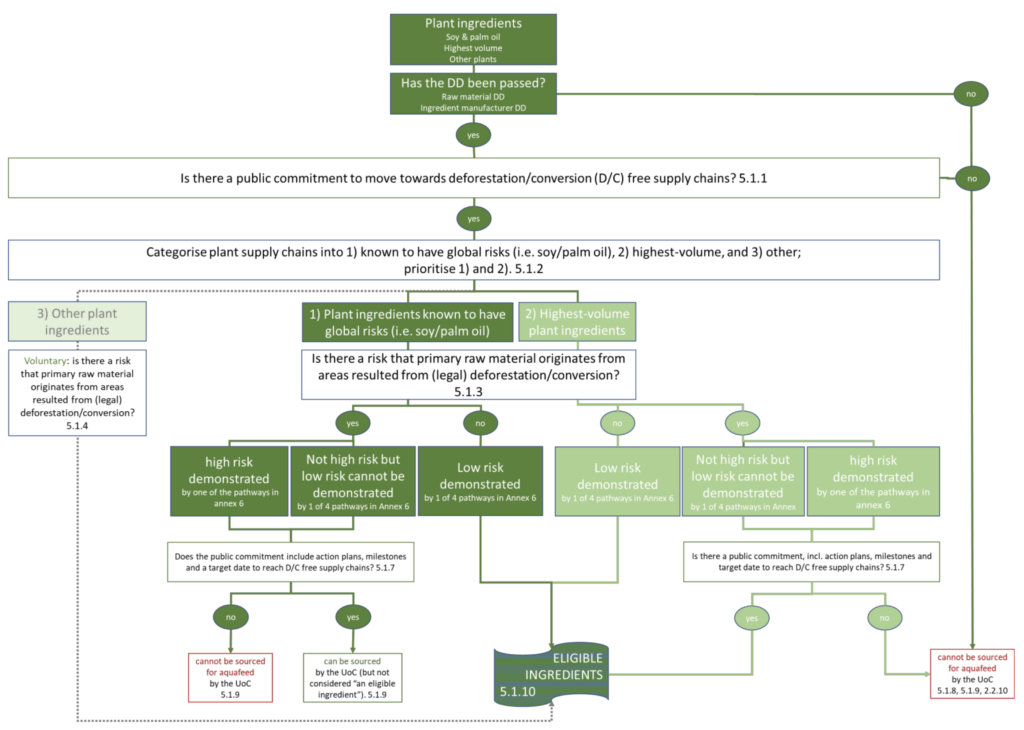
- Category 1) Plant ingredients known to have global risks, i.e. soy/palm oil (if Due Diligence indicates low risk, Deforestation/Conversion (D/C)-free commitment made, low risk demonstrated for legal D/C).
- Category 2) Highest-volume plant ingredients (if Due Diligence indicates low risk, D/C free commitment made, low risk for legal D/C demonstrated OR an action plan is under implementation).
- Category 3) other plant ingredients (if Due Diligence indicates low risk, D/C free commitment made).
- Feed stuffs (if Due Diligence indicates low risk)
- Feed additives
- Ingredients which represent <1% of the total annual ingredient-weight (volume) received by the UoC for use in aquafeeds
The following ingredients can be sourced but do not count towards the mass balance eligible volume:
- Marine-based ingredients:
- whole fish (if Due Diligence indicates low risk but not scoring at sustainability category 1-4)
- Plant-based ingredients:
- Category 1) Plant ingredients known to have global risks, i.e. soy/palm oil (if Due Diligence indicates low risk and D/C free commitment made, low risk for legal D/C cannot be demonstrated but an action plan is under implementation).
Figure 1: Determining eligible ingredients
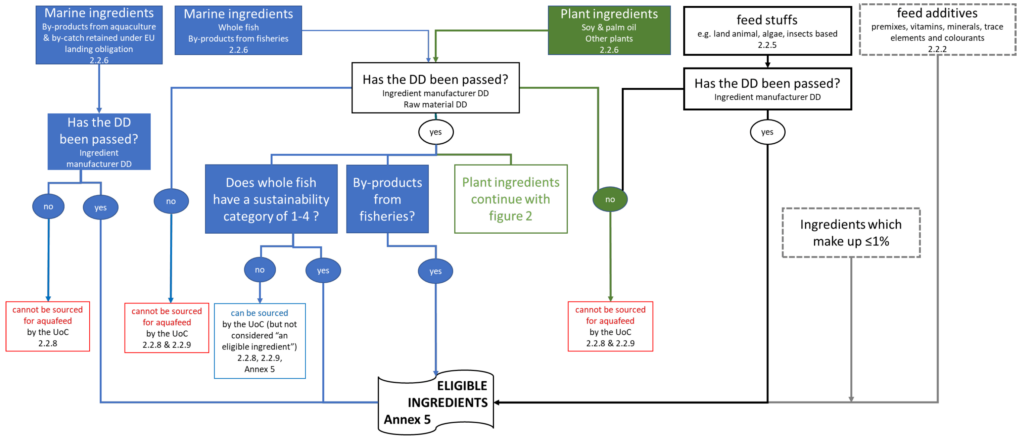
Figure 2: Determining eligible plant ingredients
Deforestation / conversion (D/C) risk assessment outcome and implications for the sourcing of plant-based ingredients. In this version of the standard, no distinct sourcing requirements apply to category 3) ingredients with a high risk or ingredients without demonstrated low risk in relation to deforestation or land conversion in plant-ingredient supply chains. This will be reviewed by ASC and could change in future versions of the standard.
2. Calculating the Eligible Volume
Follow these four steps to calculate the mass balance eligible volume:
- Sum volume (tonnes) of eligible marine ingredients
- Sum volume (tonnes) of eligible plant ingredients
- Sum volume (tonnes) of eligible feed stuffs
- Sum volume (tonnes) feed additives.
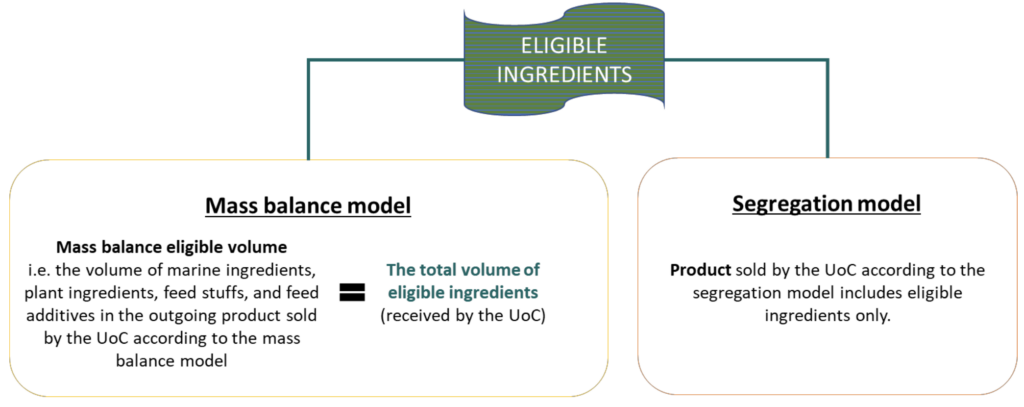
The sum of the volumes of eligible ingredients 1) – 4) above equals the “mass balance eligible volume”.
Figure 3: Eligible Ingredients Models
Annex 6 – Assurance Procedure for Deforestation / Conversion free Supply Chains
Assurance Procedure for Deforestation / Conversion free Supply Chains
Plant-based ingredients used by the UoC need to be assessed for their level of risk for the Risk Factors listed in Table 3. This additional step is focused on risk related to (legal) deforestation and land conversion.
Table 3: Risk Factors for plant-based ingredients, and schemes to demonstrate low risk.
| Environmental | |
|---|---|
| Risk factors for Plant-based primary raw material | The risk that primary raw material originates from areas resulted from legal deforestation / conversion. |
| Third-party schemes demonstrating low risk for plant based primary raw materials for the risk factors listed above[206] | See ASC website |
The UoC may choose one of four pathways to assess and determine risk related to deforestation and conversion.
Different pathways can be used to assess the risk factor deforestation / conversion. If a pathway does not result in low risk, another pathway shall be chosen. In the case of co-mingling (i.e. mixed) of ingredients, material with the highest risk classifies the blend.
The pathways are:
Country Score Card:
- ASC will provide a Country Risk Card on the ASC website that ranks the country risk level into low, medium and high risk, regarding the Risk Factor in Table 3. For countries scored low risk for the respective risk factor, no further risk assessment steps are required by the UoC. For any countries which do not yet have a Country Risk Card, a different pathway is required to determine low risk.
Sub-national/sectoral assessment:
- The UoC conducts an assessment of sub-national or sectoral level.
- Where low risk has been demonstrated, evidence shall include:
- risk assessment or a summary thereof;
- risk assessment outcome i.e., risk level;
- implemented monitoring program.
Ingredient Manufacturer assessments[207]:
- The UoC works with the ingredient manufacturer to demonstrate that plant-based primary raw material has a low risk for the Risk Factor as listed in Table 3.
- Where low risk has been demonstrated, evidence shall include:
- risk assessment or a summary thereof;
- risk assessment outcome i.e. risk level;
- measures taken and their effectiveness;
- implemented monitoring program.
- Where low risk has not yet been achieved, however, an action plan is under implementation to achieve the public commitment, evidence shall include:
- analysis of traceability of the primary raw material
- risk assessment or a summary thereof;
- risk assessment outcome i.e., risk level per risk factor;
- measures taken and their effectiveness
- Implemented monitoring program
- Status of progress in relation to quantitative and geographically-specific targets and milestones in the public action plan
Certification:
- ASC considers the schemes listed in Table 3 to address the Risk Factor to ensure low risk.
Footnotes
206. Other third-party certification schemes that address the risks in the table will be reviewed by ASC and could be accepted in future versions of the standard.
207. AFi has guidance on Supply Chain Engagement and Monitoring & Verification: https://accountability-framework.org/contents-of-the-framework/monitoring-and-verification/.
Annex 7 – Flowcharts illustrating requirements for DD, D/C-free risk assessment and summary tables of permitted work types
Flowcharts illustrating requirements for DD, D/C-free risk assessment and summary tables of permitted work types
Figure 4: General process outline for Risk Management Frameworks.
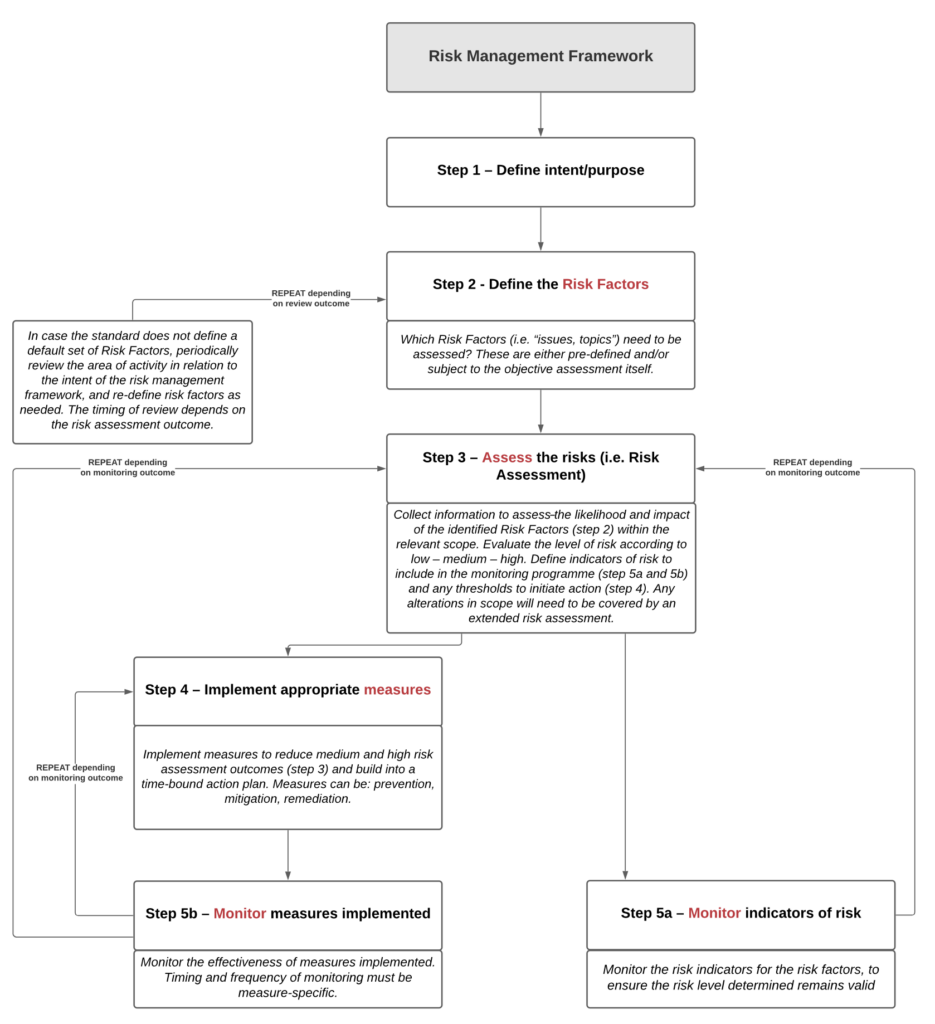
Figure 5: Illustration of the four different pathways which can be used for Due Diligence determination of low risk.
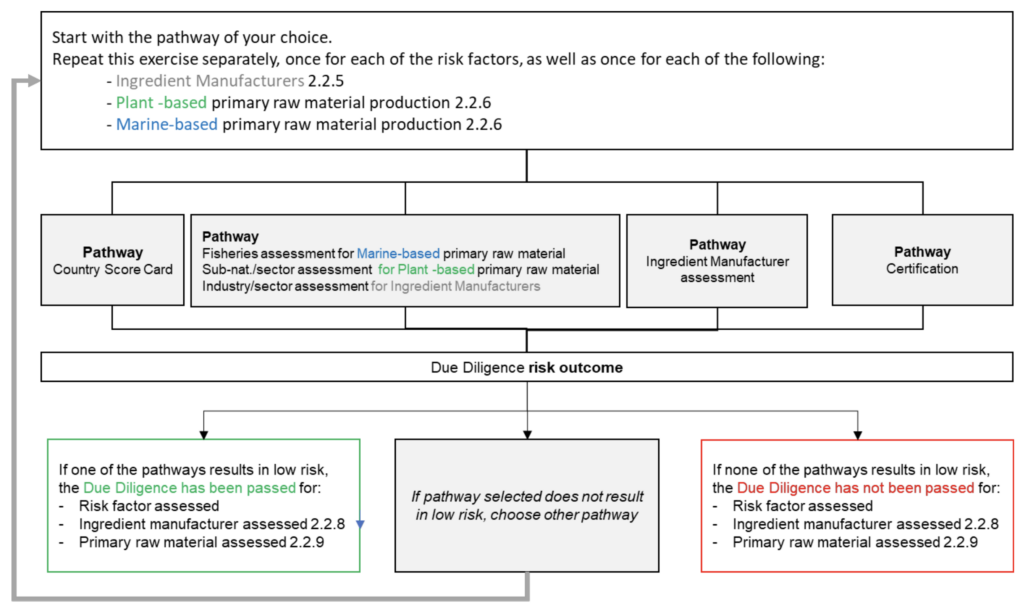
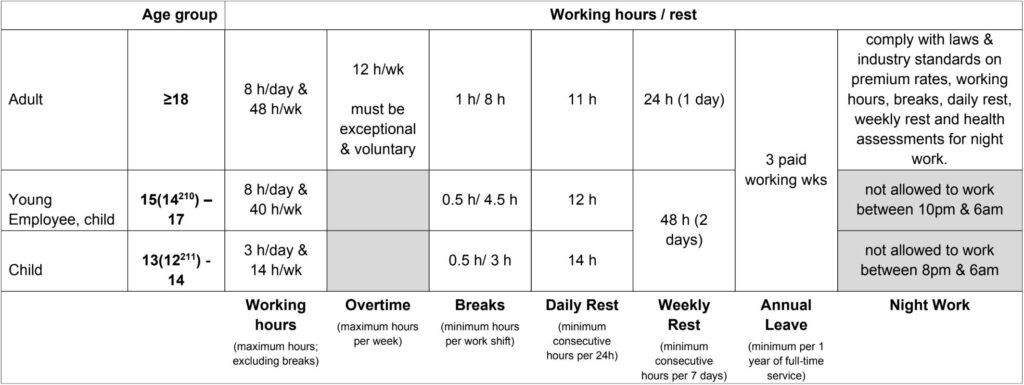
Table 4: Permitted type of work per age group. This table summarises the type of work allowed for each age group. The shaded cells indicate what is prohibited.

Table 5: Permitted working hours and rest per age group
Footnotes
208. ILO Convention 138 allows for 14 years as exception in certain developing countries. ASC follows ILO Convention 138 and equally allows employment from 14 years in these countries.
209. ILO Convention 138 allows for 12 years as exception in certain developing countries. ASC follows ILO Convention 138 and equally allows employment from 12 years in these countries.
210. ILO Convention 138 allows for 14 years as exception in certain developing countries. ASC follows ILO Convention 138 and equally allows employment from 14 years in these countries.
211. ILO Convention 138 allows for 12 years as exception in certain developing countries. ASC follows ILO Convention 138 and equally allows employment from 12 years in these countries.
Annex 8 – UoC requirements on publishing information and reporting to ASC
UoC requirements on publishing information and reporting to ASC
| Report Title | Make public | Report to ASC | Template | Indicator |
| Water Consumption Report | No | Yes | Yes | 1.18.2 |
| Water Conservation and Efficiency Plan | No | No | No | 1.18.4 |
| Waste Disposal Report | No | Yes | Yes | 1.19.2 |
| Waste Management Plan | No | No | No | 1.19.3 |
| Effluent Report | No | No | No | 1.20.2 |
| Effluent Management Plan | No | No | No | 1.20.3 |
| Energy Consumption Report | No | Yes | Yes | 1.21.2 |
| Energy Efficiency Plan | No | No | No | 1.21.3 |
| GHG Emissions Report | Yes | Yes | Yes | 1.21.4 |
| Ingredients and Primary Raw Material Report | Yes | No | Yes | 2.2.3 |
| 2.2.4 | ||||
| Due Diligence and Pathways Report | Yes | Yes | Yes | 2.2.10 |
| Sectoral/fishery Assessment or Ingredient Manufacturer Assessment Summary Report | Yes | Yes | Yes | 2.2.11 |
| Volume of Product Sold (Mass Balance) Report | No | Yes | Yes | 3.2.4 |
| Volume of Product Sold (Segregation) Report | No | Yes | Yes | 3.2.5 |
| Majority Sustainability Level Report | Yes | Yes | Yes | 4.1.5 |
| Volume of Marine Ingredients Report | Yes | Yes | Yes | 4.1.6 |
| Deforestation and Conversion Free Plant Ingredients Progress Report | Yes | No | No | 5.1.11 |
| Low Risk Plant Ingredients Report | Yes | Yes | Yes | 5.1.12 |
Deforestation/conversion-free Supply Chain
Which Feed Standard Criterion does this apply to?
Criterion 5.1 – The UoC works towards a deforestation/conversion-free supply chain.
What is the intent of this Criterion?
The feed mill conducts further Due Diligence on primary plant raw material production and commits to transition towards deforestation and conversion free supply chains.
Which RUoC sections need considering?
4.1 Feed mill staff competency requirements
4.2 Ingredient Approval Process
Annex C Competency Requirements
How do I interpret the Requirements?
Public commitment and cut-off date (5.1.1)
A commitment could also be known as a policy or pledge.
The feed mill sets a cut-off date which is no later than June 2021. Clearance of natural forest or natural ecosystems after the cut-off date renders the affected area or production unit, and the primary raw material produced there, non-compliant with no-deforestation/conversion commitments.
What do better practices look like?
Feed mills may wish to align their cut-off dates with the proposed EU Deforestation Regulation which sets a deforestation cut-off date of 31st December 2020 for soy and palm oil.
A cut-off date of 1st January 2020 would align with global goals to halt deforestation by 2020, as specified in the New York Declaration on Forests and in Target 15.2 of the United Nations Sustainable Development Goals.
Plant supply chain categorisation (5.1.2)
For Category 2 ingredients, this applies to ingredients which collectively make up the majority of the total plant ingredient volume, i.e., ≥ 50%, after Category 1 (soy and palm) have been deducted. Individual plant ingredients with the highest volumes make up the collective majority volume. See the example tables below.
Table 28: Example Plant Category 1
| Raw Material Ingredient | Raw material | Plant Ingredient Category | Received Quantity (tons) | % of total Category 1 |
| Soy protein | Soy | Category 1 | 70,000 | 93% |
| Soy oil | Soy | Category 1 | 5,000 | 7% |
| Total (tons) Category 1 | 75,000 | |||
Table 29: Example Plant Categories 2 and 3
| Raw Material Ingredient | Raw material | Plant Ingredient Category | Received Quantity (tons) | % of total excl. Category 1 |
| Pea Protein | Peas | Category 2 | 30,000 | 46% |
| Rapeseed Oil | Rapeseed | Category 2 | 20,000 | 31% |
| Linseed Oil | Linseed | Category 3 | 10,000 | 15% |
| Maize Gluten | Maize | Category 3 | 5,000 | 8% |
| Total (tons) excl. Category 1 | 65,000 | |||
Primary plant raw material production Due Diligence (5.1.3, 5.1.4, 5.1.5 and 5.1.6)
The feed mill follows the guidance for conducting Due Diligence under Principle 2. If using pathway 2, for ‘Step 2: Assessing the Risk’, the feed mill uses the following Indicators of low risk for the risk factor.
Table 30: Indicators of low risk for environmental risk factor of plant-based primary raw material
| Risk Factor | Indicator of low risk | Sources and processes used to assess risk |
| The risk that primary raw material originates from areas resulted from legal deforestation/conversion. | The farm is not located near or within remaining natural forest land or other natural ecosystems (e.g., savannahs, grasslands, peatlands and wetlands). | – Geospatial data – Validation through site based ecological mapping, document review and interviews with key stakeholders |
| The farm is located in an area with a low rate/incidence of legal deforestation and/or land conversion | – Remote sensing (e.g. satellite or radar) data, – Deforestation alerts – FAO Forest Resources Assessment series – Independent or community forest monitors. – Local communities, Indigenous Peoples and civil society organisations – Country or landscape risk assessments. – Information collected through grievance mechanisms | |
| The extension of the production of the primary raw material is unlikely to cause deforestation or land conversion. | – Studies of deforestation drivers and monitoring, reporting and verifying (MRV) reports |
Sources: OECD-FAO Guidance for Responsible Agricultural Supply Chains (2016)
What do better practices look like?
ASC has higher requirements for higher risk ingredients. For this reason, the plant ingredients have been divided into 3 different categories. Having traceability and information down to the farm level in order to perform plant risk assessments for category 3) is in many cases not yet feasible (due to small quantities and the inclusion of smallholders). Nevertheless, where this is possible, the Feed Standard intents to motivate such risk assessments through Indicator 5.1.4. It is likely that future versions of the Feed Standard will require the category 3) risk assessments to become mandatory, after which auditing would penalize high risk outcomes.
Note that if low risk cannot be demonstrated for Category 2) plant ingredients, they are still considered an eligible ingredient if they are covered by the public commitment and action plan to achieve low risk. If they are not covered by the public commitment and action plan, they cannot be sourced.
If low risk cannot be demonstrated for Category 1) plant ingredients (i.e., soy/palm oil), they are considered a non-eligible ingredient (can be used in Mass Balance Production Model feed but do not count towards the total mass balance eligible volume) if they are covered by the public commitment and action plan to achieve low risk. If they are not covered by the public commitment and action plan, they cannot be sourced.
Public Action Plan (5.1.7)
The feed mill sets a target date by which it intends to have fully achieved or adhered to its commitment (as stated in 5.1.1) as quickly as is feasible, while also recognising the importance of inclusion (e.g., smallholders) and potential differing capacities for implementation. If implementation is to be phased across different primary raw materials within each risk category or levels of suppliers, a time-bound schedule is specified per segment.
Cut-off dates and target dates
A feed mill has a March 2021 cut-off date and a January 2025 target date for their no-deforestation/conversion commitment. This signifies the following:
- The cut-off date indicates that the primary raw material covered by the commitment may not be produced on land that has been subject to deforestation or conversion since March 2021.
- The target date indicates that by January 2025 the feed mill commits to have fully achieved its commitment—i.e., to have no primary raw material volume in its supply chain that was produced on land subject to deforestation or conversion since March 2021.
- To fulfil its commitment, by no later than January 2025 the feed mill would need to manage its operations and supply chain to avoid inclusion of material produced on land subject to deforestation or conversion after March 2021.
What do better practices look like?
A target date set no later than 2025 aligns with the Accountability Framework initiative’s (AFi) consensus recommendation that companies set a target date for eliminating deforestation and ecosystem conversion from their supply chains no later than 2025. This decision reflects the urgent need for action to avoid forest and biodiversity loss and reduce emissions in support of the Paris Agreement.
Due Diligence and Pathways Report (5.1.12)
Feed mills use the template provided to annually report to ASC an overview of the outcome of the Due Diligences carried out and the respective pathways chosen.
Participation in multi-stakeholder platforms (5.1.13)
The Tropical Forest Alliance has several suggested platforms which may be relevant to the commodities/geographies used by a feed mill.
Auditing considerations
The auditor will verify the that the feed mill has made a public commitment as per the Standard Requirements and that the reporting requirements to ASC have been completed.
The auditor refers to the Due Diligence Sampling Calculator to determine how many DD assessment reports to sample from each pathway. For each report sampled, the auditor verifies the following:
- That the country/region of origin (if applicable) is as determined by the feed mill as per the following process:
- Review all available traceability documents, for example: bills of lading, invoices, delivery notes, purchase orders, and packing list/loading records for every change of ownership;
- If the raw material is sourced from a certified or scheme approved farm(s), then in place of point a), the auditor verifies the validity of all certificates of certified organisations in the supply chain that legally owned the certified products from the farm(s) to the mill (i.e., verify the Chain of Custody is maintained).
- That the risk level determined by the feed mill is supported by the Due Diligence pathway used and the evidence provided.
- That for ingredients determined not to be low risk, the feed mill has developed a public action plan to achieve its commitment (not applicable at initial audit).
The auditor will also verify that the feed mill is participating in a multi-stakeholder platform.
Useful resources
AFi guidance on cut-off dates: https://accountability-framework.org/operational-guidance/cutoff-dates/
Majority Sustainability Level
Which Feed Standard Criterion does this apply to?
Criterion 4.1 – The UoC increases the majority sustainability level of its (whole-fish) marine ingredients.
What is the intent of this Criterion?
The feed mill increases the majority sustainability level (MSL) of its (whole-fish) marine ingredients over time, moving up a level from the entry level (EL) every three years towards the maximum level (L4). This drives improvement in responsible sourcing of marine ingredients (Principle 4).
How do I interpret the Requirements?
Scope of the MSL calculation
The MSL is for whole-fish marine ingredients only (including krill, squid and shellfish, etc.). Calculations, therefore, are based on all of the whole fish marine ingredients the mill sources for aquafeed and are expressed according to the majority proportion (i.e., ≥50%) of material received. Marine by-product ingredients (derived either from fisheries or aquaculture, and including by-catch retained under a regulatory landing obligation in the EU) are not included in the MSL calculation (i.e., they do not need to be specifically calculated out).
Note that all whole fish marine ingredients must also meet the Due Diligence (DD) requirements under Principle 2 and Annex 3 of the Feed Standard.
Whole-fish derived marine ingredients outside of sustainability categories 1-4, may be used by feed mills in the minority proportion (i.e. <50%) of marine ingredients. Please note that these ingredients, however, will not count towards the mass balance eligible volume (see Annex 5 of the Feed Standard).
Verifying the sustainability category (4.1.1)
The ASC understands the practicalities of feed mill operation and notes that feed mills often have a number of different sources of marine ingredients. Where whole-fish marine ingredients from multiple fishery sources (e.g., basic FIP and comprehensive FIP) are received in a mixture, and the proportion of the ingredients from each of these sources is known, the quantities will be allocated to the relevant source in proportion to the actual content. If the proportion of the ingredients from each of these sources is not known, the whole quantity will be allocated to the source which falls within the lowest sustainability category of the material in the mixture.
Note that any batches/lots need to also meet the requirements of schemes listed in the sustainability categories. For example, MarinTrust compliant batches cannot contain ‘non-approved’ MarinTrust material such as that which cannot be traced back to a fishery or has not been sourced from a MarinTrust approved fishery.
Weights used in the MSL calculation relate to the weight of the ingredient during receiving.
Verification of whole fish marine ingredients as per the sustainability categories can be conducted as per the following table.
Table 24: Verification of sustainability categories
| Sustainability Category | Verification Process |
| 1 | a) The fishery is listed as active (basic) on Fishery Progress website, and; b) The fishery is listed as ‘approved’ on the MarinTrust website and is matched to the traceability acceptance document from the ingredient manufacturer/ supplier; c) If the fishery is not listed as approved on both websites, compliance cannot be assumed unless confirmation is received from the missing publisher (MarinTrust or Fishery Progress). d) The ingredient manufacturer is a MarinTrust Improver Programme accepted site; e) The supply chain actors between the ingredient manufacturer and the feed mill hold a valid MarinTrust Chain of Custody (CoC) certification and documentation (delivery/purchase records) accompanying the raw material confirms its CoC certified status from factory to feed mill; OR f) The feed mill can demonstrate a third-party verified traceability system from factory to mill. |
| 2 | a) The fishery is listed as ‘approved’ on the MarinTrust website and is matched to the traceability certificate from the ingredient manufacturer/ supplier; b) The ingredient manufacturer holds valid MarinTrust certification (or equivalent as per footnote 202 in the ASC Feed Standard); c) The supply chain actors between the ingredient manufacturer and the feed mill hold a valid MarinTrust Chain of Custody (CoC) certification and documentation (delivery/purchase records) accompanying the raw material confirms its CoC certified status from factory to feed mill; OR d) The feed mill can demonstrate a third-party verified traceability system from factory to mill. |
| 3 | a) The fishery is listed as active (comprehensive) on Fishery Progress website, and; b) The fishery is listed as ‘approved’ on the MarinTrust website and is matched to the traceability certificate from the ingredient manufacturer/ supplier; c) If the fishery is not listed as approved on both websites, compliance cannot be assumed unless confirmation is received from the missing publisher (MarinTrust or Fishery Progress). d) The ingredient manufacturer holds valid MarinTrust certification (or equivalent as per footnote 202 in the ASC Feed Standard); e) The supply chain actors between the ingredient manufacturer and the feed mill hold a valid MarinTrust Chain of Custody (CoC) certification and documentation (delivery/purchase records) accompanying the raw material confirms its CoC certified status from factory to feed mill. OR f) The feed mill can demonstrate a third-party verified traceability system from factory to mill. |
| 4 | a) If the feed mill sources directly from a fishery:the fishery is listed as ‘certified’ on the MSC ‘track a fishery’ website; b) the ingredient(s) used by the mill is listed on the MSC fishery certificate as certified (or equivalent as per footnote 205 in the ASC Feed Standard); c) all the records are matching in the traceability documents (e.g., bills of lading, invoices, delivery notes, health certificates/ veterinary checks, catch certificates, purchase orders, and packing list/loading records). If the feed mill sources from an MSC Chain of Custody (CoC) certified organisation: a) the ingredient manufacturer/supplier holds a valid MSC CoC certificate and is listed as certified in the MSC ‘find a supplier’ website; b) the ingredient(s) used by the mill is listed on the certificate as certified and are included in the scope sub-categories for trading fish meal and trading fish oil; c) all the records are matching in the traceability documents (e.g., bills of lading, invoices, delivery notes, health certificates/ veterinary checks, catch certificates, purchase orders, and packing list/loading records). |
Example MSL calculations
The tables below provide example calculations of the MSL.
Table 25: Illustration of a range of examples for the MSL
| Whole fish ingredients classification | Volume in tonnes | |||||||||
| Volume of whole-fish ingredients scoring at Category 1 | 0 | 600 | 450 | 100 | 100 | 50 | 50 | 0 | 0 | 0 |
| Volume of whole-fish ingredients scoring at Category 2 | 0 | 0 | 150 | 500 | 100 | 200 | 100 | 50 | 300 | 250 |
| Volume of whole-fish ingredients scoring at Category 3 | 0 | 0 | 0 | 0 | 300 | 300 | 430 | 50 | 100 | 100 |
| Volume of whole-fish ingredients scoring at Category 4 | 0 | 0 | 0 | 0 | 20 | 50 | 70 | 350 | 300 | 350 |
| Volume of whole-fish ingredients that does not score at Category 1-4 | 300 | 400 | 550 | 400 | 350 | 350 | 350 | 200 | 100 | 100 |
| Total whole fish ingredients | 300 | 1000 | 1150 | 1000 | 870 | 950 | 1000 | 650 | 800 | 800 |
| MSL | 0 | 1 | 1 | 2 | 1 | 2 | 3 | 4 | 3 | 3 |
Table 26: Example MSL calculation
| Marine Raw Material (whole) | ASC Category | % of annual total (whole fish) |
| Meal from whole Anchoveta E. ringens (FAO 87, Chilean EEZ Regions IV-XV) | 2(MarinTrust) | 35% |
| Oil from whole Anchoveta E. ringens (FAO 87, Chilean EEZ Regions V-X) | 2(MarinTrust) | 20% |
| Meal from whole Araucanian Herring S. benticki (FAO 87, Chilean EEZ Regions V-X) | 2(MarinTrust) | 25% |
| Oil from whole Chilean Jack Mackerel T. murphyi (FAO 87, Chilean EEZ Regions X-XV) | 4(MSC) | 10% |
| Meal from whole Japanese Anchovy E. JaponicusChina | 0 | 5% |
| Other whole fish ingredients | 0 | 5% |
| MSL | 2 |
Calculating the Entry Level and maintaining/increasing the MSL (4.1.2, 4.1.3 and 4.1.4)
The Entry Level (EL) reflects the MSL as assessed and calculated over the 24 months prior to the initial audit. It is not possible for the feed mill to choose a lower EL if whole fish ingredients meet the requirements of multiple sustainability categories such as MarinTrust as well as MSC. The highest score is used to calculate the EL, not the lowest so as to simply use the other certification to comply with the requirement to increase its MSL for each subsequent certificate cycle. For example, if a feed mill’s current level is 2, they cannot choose to start at 1.
The MSL is calculated annually (January to December) and maintained from year to year (verified at surveillance audit) and at the 3 year certificate cycle end, the next level needs to be met to achieve recertification. The table below provides examples of MSL maintenance under various hypothetical scenarios.
Table 27: Examples of MSL maintenance under various hypothetical scenarios
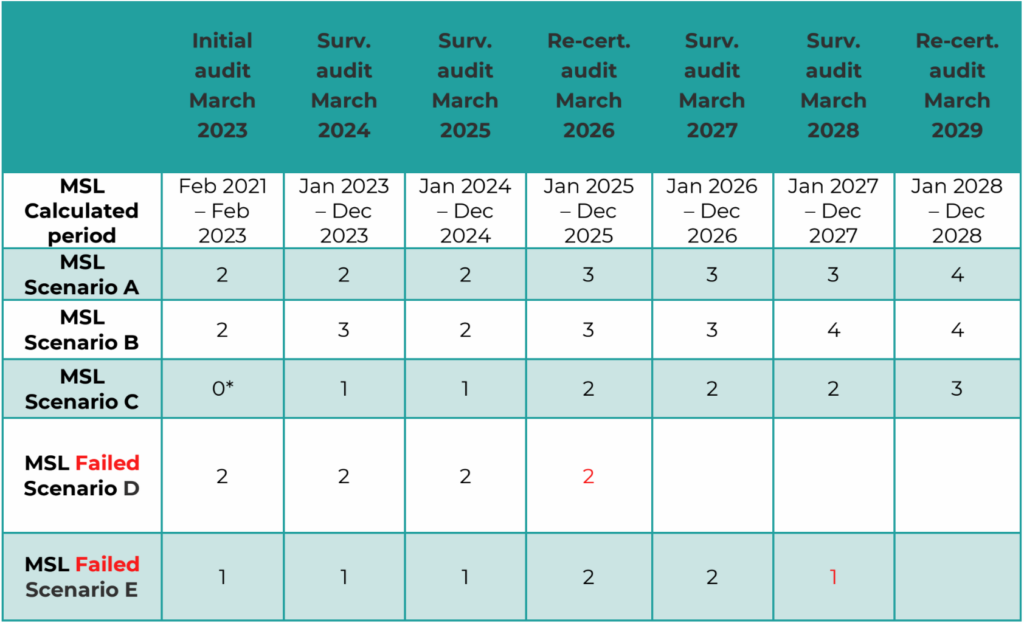
Failed scenarios D and E are shown in red.
*As long as compliance as per footnote 162 of the ASC Feed Standard (Indicator 4.1.3) is demonstrated as follows:
- The most likely path will be for feed mills to demonstrate that they have secured sourcing contracts for category 1 compliant raw material but might still be in the process of using up old stock/contracted supplies and will be switching over to the new source within the first year of certification.
- In other cases, the feed mill may have been working together with their supply chains for some time, and may be in the final stages of the following processes:
- Raw material is currently under assessment for MarinTrust IP and basic FIP (and other conditions of Category 1 are met), and there is reasonable expectation that this material will be available within the next 12 months, and
- The ingredient manufacturer is currently under assessment to become a MarinTrust Improver Programme Accepted Site (and other conditions of Category 1 are met).
Possible exceptions to maintaining/increasing the MSL (4.1.3 and 4.1.4)
During surveillance audits, the feed mill demonstrates elements of a procurement strategy that shows that they are on route to achieve a higher MSL by the next recertification cycle. Some exceptions to compliance as detailed in footnote 163 of the ASC Feed Standard (Indicator 4.1.4) may occur, for example:
- If a feed mill sources the majority of its marine ingredients from a single fishery which is in a FIP, but which has not yet managed to move from a comprehensive FIP to MSC certification within the 3-year ASC certification cycle, then the feed mill could maintain its MSL 3 for another 3-year period and continue sourcing from that FIP, in anticipation that the FIP will reach MSC certification within that period, and that therefore the mill will move to MSL 4 within the second 3-year cycle. Where such a scenario occurs, it is only acceptable once.
- If a feed mill is dependent on a single MSC certified fishery in order to maintain its MSL 3, and that fishery temporarily drops out of MSC certification and into a comprehensive FIP, then the mill could maintain its MSL 3 for another 3-year period and continue sourcing from the FIP, in anticipation that the FIP will reach MSC certification and therefore the mill will move to MSL 4 within the second 3-year cycle. Where such a scenario occurs, it is only acceptable once.
Note, the dependency in this example is that the feed mill had planned and had reasonable expectations to move from MSL 3 to MSL 4 (e.g., has sourcing contracts to gradually increase its volume from the MSC fishery, and has documentation to support this). If, however, any of the other marine ingredients received by the feed mill score at sustainability category 4 and for which an increased volume is potentially available, then the mill is considered not to be dependent on the MSC fishery and the extension would not be allowed.
Note, if a mill is at MSL 4 and is sourcing ≥50% from a MSC certified fishery which loses its certification, the mill drops to MSL 3 and would therefore likely lose its ASC feed certification. Feed mills should consider the consistency of supply and try to source from multiple MSC fisheries providing raw material for marine ingredient production in their procurement strategies in order to mitigate any risk of reduction in MSL.
Note that where claimed, any dependency on a specific fishery must be demonstrated by purchase records indicating historical deliveries to the mill over a time period in excess of three years. Such feed mills should also present a case that indicates that importing other raw materials are not a practical or economically viable option (i.e., causes significant delays in production or increases in costs of production), such evidence could include, for example: logistical issues with deliveries; particular nutritional factors related to those marine ingredients specifically; production of certain marine ingredients and their delivery according to the scheduling of production cycles.
- Where a feed mill sources most of its marine ingredients from a single fishery which is in a basic FIP (and meets the other requirements of Category 1), and which has not progressed as planned, and the mill has no obvious relationship with the fishery e.g., is not working with/sponsoring the fishery to progress, and there are other similar fisheries (species, logistics, availability) which would fulfill the mills moving up the MSL ladder as required, then this mill is considered to be not dependent on that fishery, and consequently is not allowed to extend its cycle on the current MSL for another 3 years.
Reporting templates (4.1.5 and 4.1.6)
A reporting template is provided on the ASC website through which the feed mill can calculate the MSL from the various sources of whole-fish marine ingredients used, for the majority proportion (i.e., ≥50%) of whole – fish marine ingredients.
The MSL and the total volume of the marine ingredients used is published on the Feed mill’s website prior to initial certification and prior to subsequent re-certification.
Note that purchasing raw materials certified or approved to any scheme listed in a Sustainability Category does not necessarily entitle the feed mill to make any claims relating to that scheme. Feed mills wishing to make claims should contact the scheme owner for further information on their requirements.
Auditing considerations
The auditor verifies that the sustainability categorisation was performed correctly by sampling records, including at least one sample per sustainability category. The records to be checked are listed in table 24. The auditor checks that only whole-fish derived ingredients were used for the calculation.
The auditor verifies that the Majority Sustainability Level was calculated correctly by reviewing the volume totals used for the calculations.
The auditor will also verify that the reporting requirements to ASC have been completed.
Ingredient Accounting System
Which Feed Standard Criterion does this apply to?
Criterion 3.1 – The UoC implements an ingredient in-coming and out-going accounting system.
What is the intent of this Criterion?
Compliance with the sustainability Indicators in the Standard requires accurate classification and accounting of ingredients coming into the mill. To produce feed under the Mass Balance Production Model, feed mills need to have an ingredient accounting system in place to ensure volumes of incoming eligible ingredients cover the volumes of outgoing ASC Mass Balance feed produced.
Which RUoC sections need considering?
4.4 Shared Ingredient Accounting System (if applicable)
Additional supporting information for feed mills relating to the Ingredient Accounting System can be found in the Feed RUoC document. This is to provide additional clarity to ensure consistent implementation by mills of the Production Models. In a future version, this information may be transferred into the standard itself.
Reference to specific parts of the RUoC requirements are detailed in relevant sections below.
How do I interpret the Requirements?
The Ingredient Accounting System
The Ingredient Accounting System (IAS) is a tool the mill will use to account for incoming and outgoing volumes of Eligible Ingredients in product produced under the Mass Balance Production Model.
The ASC does not prescribe what format the IAS takes, it could be as sophisticated as to be incorporated into the mills inventory system (e.g., SAP Software system or ERP Inventory Management System) or as basic as an excel spreadsheet (with restricted access). Each option is acceptable provided it meets the requirements set out in RUoC Section 4.3 and (where applicable) Section 4.4.
(RUoC 4.3.1.3) The IAS is updated on a continual basis. It is expected that the mill will have robust procedures in place to verify the eligibility status of all incoming volumes prior to entering into the IAS (i.e., ensure it is an eligible ingredient) and to ensure the volume (i.e., quantity) is correct.
(RUoC 4.3.1.3 a & b) ‘Upon Receipt’ means where there is physical delivery of the ingredient within the accounting period. Payment / invoicing or purchase contract for the ingredient not physically on site or Intention to purchase an eligible volume is not sufficient to enter a volume into the IAS as the mill will verify the ingredient as eligible prior to entering the volume into the IAS and as per requirements in RUoC 4.2 Ingredient Approval Process.
Recording ingredients received
(Standard 3.1.1 & 3.1.2) Records of each incoming delivery and outgoing product should be carefully maintained. This may be completed manually in paper records or electronically via other software programmes. Either way the information recorded should be accurate, maintained and data easily retrievable by relevant personnel. (See RUoC Section 4.2 – 4.4).
(Standard 3.1.3 & 3.1.4) Please refer to RUoC Section 4.5.4 – 4.6.
Auditing considerations
Sampling the IAS: (See also CAR section 15 & RUoC Section 4.3)
(CAR 15.1) The auditor may use their professional discretion when selecting the 5% sample of Eligible Volume entered into the IAS. The auditor will cross reference this volume against supporting documentation to verify the volume entered correlates to the volume of Eligible Volume supplied (e.g., delivery dockets, supplier invoices, contract & Due Diligence assessments). The same process can be completed against Eligible Volume deducted from the IAS which could be done by reviewing despatch documents, invoices or contracts for ASC product sold under the Mass Balance Production Model.
This review could be completed either before the audit as part of the desk review and/or during the audit itself. Auditors can use a risk-based approach to sampling, for example by reviewing any unusual or large input volumes, review a broad range of time within the accounting period, including different suppliers & customers. Additional reviews can also be added to the 5% sample at the auditor’s discretion, for example where the auditor sees gaps or has additional queries on records provided.
The auditor may also ask to follow-up questions to determine who is responsible for entering data into the IAS; Is there more than one person trained? What happens if that person is ill, away, or unavailable? Is the IAS protected from accidental or deliberate altering of data?
Eligible Ingredients and ASC Production Models
Which Feed Standard Criterion does this apply to?
Criterion 3.2 – The UoC determines eligible ingredients and calculates its mass-balance eligible volume.
What is the intent of this Criterion?
The ASC recognises that it is most unlikely that there are currently sufficient volumes of sustainably certified raw materials to produce ASC feed. Until then, and as a first step, feed mills can use one or both of the two accepted ASC Production Models to produce ASC compliant feed.
ASC feed may come in two forms:
- Product produced under the Segregation Production Model which contains only Eligible Ingredients OR
- Product produced under the Mass Balance Production Model which may contain both eligible and Non-eligible Ingredients.
Which RUoC sections need considering?
Additional supporting information for feed mills relating to Eligible Ingredients and Production Models can be found in the Feed RUoC document. The reason for this is to provide additional clarity to ensure consistent implementation of the Production Model requirements. In a future version this information may be transferred into the standard itself.
Reference to specific parts of the RUoC requirements are detailed in relevant sections below.
How do I interpret the Requirements?
The ASC Production Models. (RUoC Section 4.5)
Take note:
It is important to make the distinction that the ASC Production Models summarised below are not to be confused with other Chain of Custody models that are commonly seen within other industry Standards e.g., RSPO and RTRS Chain of Custody. The scope of the ASC Production Models does not extend into the supply chain and only applies to ingredients and feed product while they are within the control of the mill. The mill is however required to have appropriate traceability records in place to demonstrate the Due Diligence outcome of low risk. (See RUoC 4.2.1).
Mass Balance Production Model (RUoC Section 4.5.3)
The Mass Balance Production Model is a system for administratively accounting for the inputs of Eligible Ingredients and outputs of ASC complaint feed. It is not linked to the physical product and there is no physical traceability requirement.
When using the Mass Balance Production Model, unlike the Segregation Production Model, the physical product is not necessarily made up exclusively of Eligible Ingredients, instead the mill will have an Ingredient Accounting System (IAS). The purpose of the IAS is to record input volume of incoming Eligible Ingredients and deduction (or output) of ASC compliant feed.
The Mass Balance Production Model allows the physical mixing of Eligible Ingredients and Non-eligible Ingredients at any stage in the feed production process, provided overall quantities are monitored via the IAS. This results in a claim on a part of the output volume (ASC Product), proportional to the input volume of Eligible Ingredients purchased.
There is no minimum quantity of Eligible Ingredients required under the Mass Balance Production Model. So, in effect a bag / batch of ASC feed produced under the Mass Balance Production Model could physically contain no Eligible Ingredients in that bag / batch of feed, conversely it could also contain 100% Eligible Ingredients.
In simple terms, the mill can only make an ASC claim on a volume of finished product, based on the same volume of Eligible Ingredients purchased within the Accounting Period. The Accounting Period for the Mass Balance Production Model is 12 calendar months and runs from January to December. Think of the IAS as a bank account for Eligible Ingredients, it means that the mill can ‘over-draw’ from their bank account within the 12-month accounting period, however, by the end of the accounting period (i.e., December 30th of that year) the bank account (IAS) must be balanced.
This will require some forward planning by the mill to ensure the account can be balanced by the end of the Accounting Period and also requires communication between departments to ensure there is a sufficient volume of purchased Eligible Ingredients in the IAS to cover production needs.
To reduce the risk of the accounting system being overdrawn at the end of the accounting period, the mill may wish to review their account balance on a more regular basis, for example every month or every quarter, this way if there is a potential short fall in eligible volume, there is sufficient time to arrange purchase of additional Eligible Ingredients.
(RUoC 4.5.3.3) The mill may overdraw volume during the 12-month accounting period as long as overall quantities are monitored (via the IAS) and the volume is balanced by the end of the accounting period.
In any production environment there will be production yields. These yields will have been considered under RUoC Requirement 4.3.1.4. When conducting the end of year balancing calculation, it is unlikely the account inputs and outputs will be 100% balanced. With this in mind, it is suggested that there should be a compliance window of up to a maximum of 5% tolerance. This means the mill accounting system can be overdrawn by a maximum of 5% before a non-conformance may be considered.
In the example below (figure 6) there are ten ton of feed ingredients purchased by the feed mill, of the ten-ton, six ton are determined by the mill to be from Eligible Ingredients and four ton are from non-eligible ingredients. The Mass Balance Production Model allows for eligible and non-eligible ingredients to be mixed within the production process; however, the feed mill is only permitted to produce and make a claim on six ton of ASC product (based on the purchase volume of eligible ingredients).
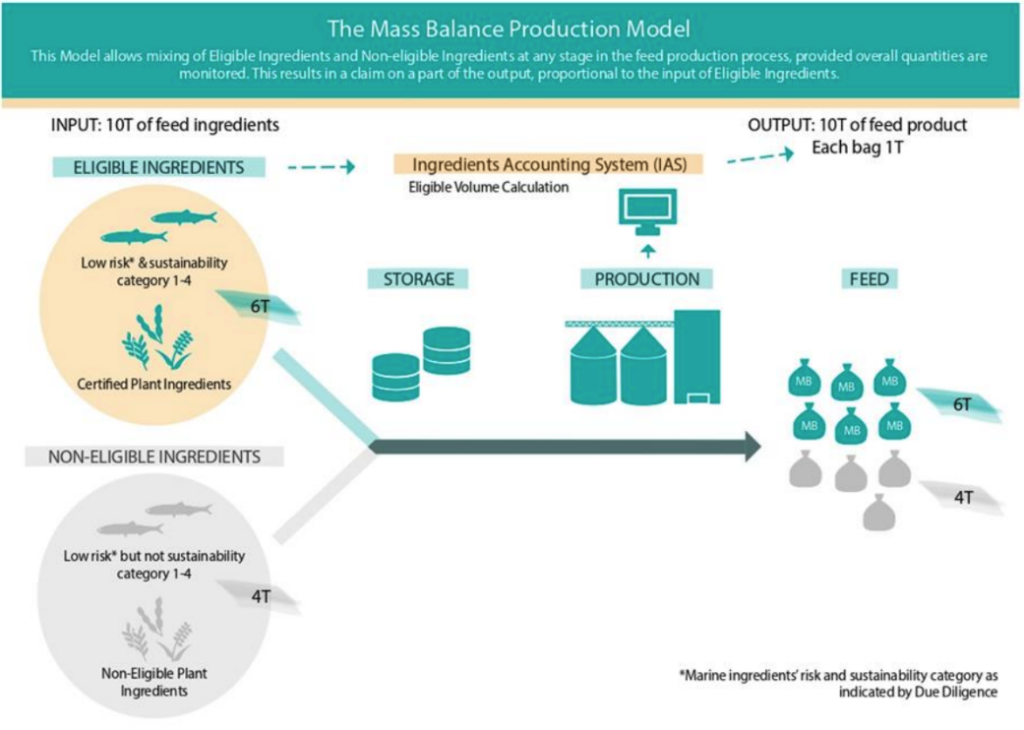
Figure 6: The Mass Balance Production Model
Standard 3.2.1 Calculation of Eligible Volume.
The calculation of the balancing summary occurs within the same 12-month Accounting Period i.e., the calculation for incoming eligible volume fully overlaps timewise with the calculation for outgoing volume. ASC acknowledges there is commonly a delay between receiving and production. However, comparing the same time periods as well as working with volumes actually received increases the auditability & consistency between feed mills and simplifies balance calculations.
The goal is to calculate eligible volume, So for incoming eligible ingredient volumes to match outgoing ingredient volumes. However, where a mill does not have the technology in place to calculate outgoing volume by ingredient, the outgoing volume can also be calculated by product (feed). In both cases, the total overall volume is compared rather than the volume of (for example) incoming pea meal versus the volume of outgoing pea meal.
Initial audits
During the Initial audit, the auditor verifies by sampling, that volumes entered into the IAS since the start of the calendar year (i.e., January) are eligible.
For a feed mills initial audit, the accounting period is from the date of initial certification (for example June) until December of that year.
For all initial audits, the mill will not be required to demonstrate the IAS is balanced. This is because the full duration of the accounting period has not yet been completed. Verification of the Balancing Summary of the IAS will be competed at the next (i.e., surveillance) audit. See also the RUoC section 4.5.2.1 & 4.5.3.1 for more detail.
However, as part of the prerequisites for an initial audit, the feed mill is required to have conducted at least one Ingredient Accounting System balancing exercise resulting in accurate calculation prior to the initial audit with records maintained for review. (See RUoC 6.2). This exercise should be able to demonstrate that the Ingredient Accounting System is functioning effectively and accurately.
Eligible volume can only be deducted from the IAS once the mill has received notification from their CAB with a positive certification decision. (e.g., Certificate issue date / Certification Decision date.
(Standard 3.2.2) Mass Balance Calculation
Please refer to RUoC Section 4.5.2 & 4.5.3
(Standard 3.2.4) Annual reporting
The mill is required to report annually to ASC the total volume of product sold under the Mass Balance Production Model. The volume reported will be verified through sampling of records during the audit by the ASC auditor.
The following are some examples to help demonstrate how the IAS will develop over the audit cycle.
Animal Feed Inc. (AFI) a feed mill is interested in seeking ASC Feed certification. Due to space limitations within the feed mill, AFI’s Management Team have decided to operate under the Mass Balance Production Model. They will implement an Ingredients Accounting System (IAS) to record intake of eligible ingredient volume as well as the volume of ASC compliant product sold under the Mass Balance Production Model.
In collaboration with their chosen CAB, the initial audit date is agreed for March 2023.
Initial Audit March 2023:
Overview of the IAS at the initial audit in March 2023
At Initial audit, the auditor verified, by sampling, that eligible volumes received at the UoC and entered into the IAS since the start of the calendar year (i.e., January 2023) were eligible.
This can be done by
- reviewing Due Diligence reports to verify the eligible ingredients in question meet the ASC Standard requirements to demonstrate low risk.
- cross refence with associated invoices and incoming records to verify the ingredient assessed is the same ingredient received.
The auditor will also review the last IAS balancing exercise conducted by the UoC to demonstrate that that the mill is confident the IAS is operating effectively and accurately.
Remember at initial audit, the mill will not be required to demonstrate the IAS is balanced (RUoC 4.5.3.1). This is because the full duration of the Accounting Period 2023 has not yet been completed. Verification of the Balancing Summary of the Accounting Period 2023 will be competed at the next (surveillance) audit in 2024.
Table 31: Example IAS balancing at initial audit
| Accounting Period 2023 (January to December) | Received Eligible Ingredients 2023 (MT) | Sold ASC Product 2023 (MT) | Carryover to next Accounting Period |
| 1 | 0 | 0 | |
| 2 | 1000 | 0 | |
| 3 | 0 | 0 | |
| 4 | 200 | 0 | |
| Feed mill Certified May 2023 | |||
| 5 | N/A | N/A | |
| 6 | N/A | N/A | |
| 7 | N/A | N/A | |
| 8 | N/A | N/A | |
| 9 | N/A | N/A | |
| 10 | N/A | N/A | |
| 11 | N/A | N/A | |
| 12 | N/A | N/A | |
| Total | N/A | N/A | N/A |
1st Surveillance audit 2024:
At surveillance audit in March 2024, the auditor will verify, by sampling, that volumes entered into the IAS during the previous year accounting period (i.e., January – December 2023) were eligible.
Table 32: Example IAS balancing at 1st surveillance audit
| Accounting Period 2023 (January to December) | Received Eligible Ingredients 2023 (MT) | Sold ASC Product 2023 (MT) | Carryover to next Accounting Period |
| 1 | 0 | 0 | |
| 2 | 1000 | 0 | |
| 3 | 0 | 0 | |
| 4 | 200 | 0 | |
| Feed mill Certified May 2023 | |||
| 5 | 500 | 500 | |
| 6 | 300 | 300 | |
| 7 | 0 | 500 | |
| 8 | 1,200 | 300 | |
| 9 | 600 | 500 | |
| 10 | 500 | 300 | |
| 11 | 700 | 500 | |
| 12 | 0 | 700 | |
| Total | 5,000 | 3,600 | |
| Carryover: | 1,400MT | ||
Question: Is the IAS at the end of the Accounting Period 2023 Compliant?
Answer: Yes,
Reason: because the mill has received a higher volume of eligible ingredients (5,000MT) than ASC Mass Balance Production Model product sold (3,600MT) within the accounting period 2023.
In addition, 1,400MT of Eligible Volume can be carried over into the next Accounting Period (RUoC 4.5.3.4).
2nd Surveillance audit 2025:
(Assume all purchased eligible ingredients are in fact eligible ingredients)
Table 33: Example IAS balancing at 2nd surveillance audit
| Accounting Period 2024 (January to December) | Received Eligible Ingredients 2024 (MT) | Sold ASC Product 2024 (MT) | Accounting Period 2024 (January to December) |
| 1 | 0 | 200 | 1400 |
| 2 | 1200 | 300 | |
| 3 | 0 | 1500 | |
| 4 | 1,000 | 300 | |
| 5 | 500 | 500 | |
| 6 | 300 | 300 | |
| 7 | 0 | 500 | |
| 8 | 1,200 | 1300 | |
| 9 | 600 | 1500 | |
| 10 | 500 | 700 | |
| 11 | 700 | 500 | |
| 12 | 0 | 700 | |
| Total | 6,000 | 8,300 | |
| Total inc. Carryover | 7,400 |
Question: Is the IAS at the end of the Accounting Period 2024 Compliant?
Answer: No
Reason: Within the Accounting Period of 2024, the feed mill has sold more ASC Mass Balance Production Model product (8,300MT) than Eligible Volume purchased plus Eligible Volume carried over from the previous year which is 7,400 MT in total. (RUoC 4.5.3.2 / 4.5.3.3).
This equates to the IAS being overdrawn by 900MT (or 12%) and in this example the auditor would raise a major non-conformity as per CAR requirement 21.5.2.3 (c)
Segregation Production Model. (RUoC Section 4.5.4)
Within the Segregation Production Model, all Eligible Ingredients are kept physically segregated from all Non-eligible Ingredients while under the control of the mill.
This model allows those taking ownership of product (ASC feed) to be assured that Eligible Ingredients contained within have been kept physically segregated through all stages under the control of the mill from Non-eligible Ingredients of the same type.
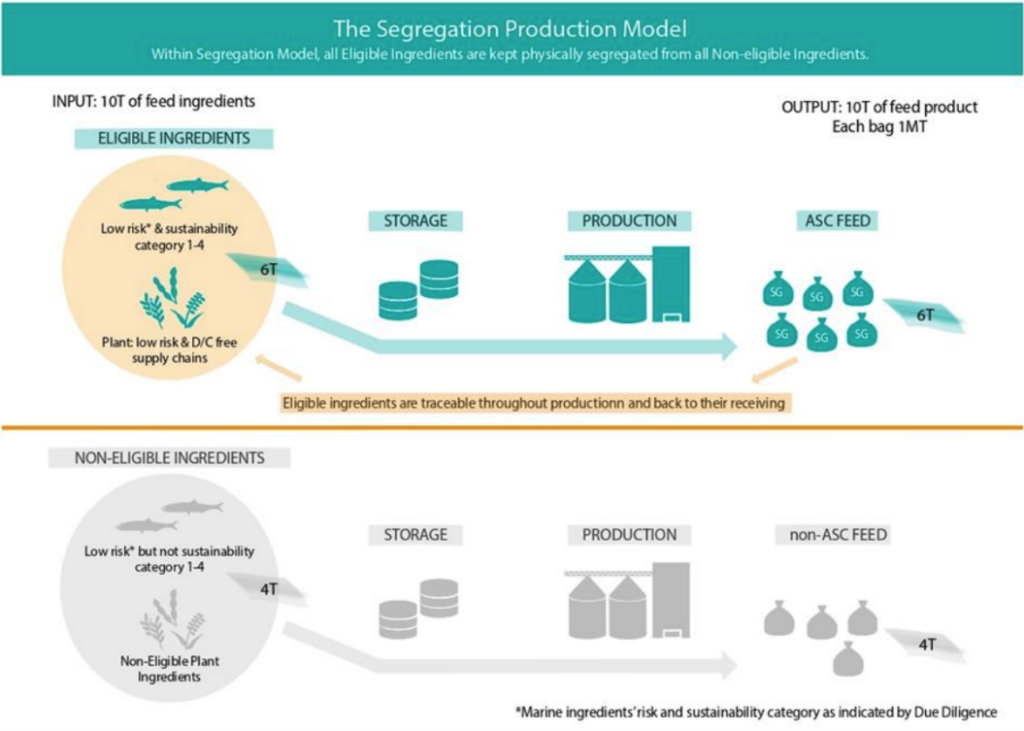
Figure 7: The Segregation Production Model
When using the Segregation Production Model, the outgoing product, (or feed), is made up exclusively of Eligible Ingredients (excluding feed additives), for this reason a segregation and traceability system within the facility is needed to identify and keep Eligible Ingredients segregated from ingredients which are not classified as Eligible Ingredients but may also be brought on site by the feed mill.
The mill is required to report annually to ASC the total volume of product sold under the Segregation Production Model. The volume reported will be verified through sampling of records during the audit by the ASC auditor.
In the example above (figure 7), a feed mill has purchased ten ton of feed ingredients. Following the Due Diligence process, six of those ten ton were determined to be Eligible Ingredients (upper part of the diagram). Four ton of those ingredients were determined to be Non-eligible Ingredients (lower part of the diagram). This means that six ton of ASC compliant product can be produced under the Segregation Production Model.
Under the Segregation Production Model, all Eligible Ingredients are kept physically segregated from all non-eligible ingredients throughout all processes under the control of the feed mill and are traceable throughout production and back to their receiving.
The feed mill will be required to have sufficient capacity (e.g., separate silos / containers) and processes and procedures in place to always ensure physical segregation of the eligible ingredients and subsequent feed product while under their control.
Production scheduling guidance when producing product under the Segregation Production Model:
There are a number of different methods that could be employed at the mill to ensure segregation of eligible ingredients from non-eligible ingredients. The size and capacity of the mill will have an impact on which method would work best.
The mill may conduct a risk assessment (RUoC 4.5.4.2) to develop controls and procedures for handling raw material ingredients, intermediate material and finished product to reduce (and, where possible, remove) the risk of substitution or uncontrolled mixing between Eligible Ingredients and Non-eligible Ingredients.
Below are some examples of controls that could be implemented:
Physical segregation:
Eligible Ingredients will be physically segregated from non-eligible ingredients. In addition, subsequent ASC product produced under the Segregation Production Model is physically segregated from product produced under the Mass Balance Production Model or non-ASC products. This could involve, for example, dedicated silos, dedicated storage areas, dedicated (e.g., colour-coded) production equipment, and the use of dedicated production lines.
Time segregation:
Where products must be handled in the same factory areas or on the same production lines, consideration can be given to the use of time segregation. This may be used in mill settings that do not have sufficient space or capacity for a dedicated production line. Production planning can be used to schedule production in order of risk. This can also minimise the frequency of changeovers by scheduling, for example, ASC Segregation Production Model products first, followed by ASC Mass Balance Production Model product and then non-ASC aquaculture products could be scheduled to the end of a day/shift or before cleaning operations.
Purging / Flushing the system:
If there is a closed production system with only minimal dry-cleaning process, flushing or purging the feed processing equipment can prevent contamination between feed batches. The transfer of residues from one batch to the subsequent batch is sometimes referred to as carryover. Flushing the equipment is one method used to remove any potential carryover from the previously produced product in the system.
The mill could purge or flush the production line between (for example) a batch of non-ASC product, changing over to a batch of ASC Segregation Production Model Product. The line can be flushed with product containing only Eligible Ingredient. This flushed product is then designated as ‘non-eligible’ (because it will contain a mix of eligible and non-eligible product). It can be stored separately and could later be used in a product produced under the ASC Mass Balance Production Model or a non-ASC product.
The mill could conduct a volume calculation to determine an appropriate volume of product needed to flush the system. The calculation may consider several factors e.g., length and diameter of the pipes, run rate/line speed. If the mill decides to do this calculation, they may wish to add an additional volume as a buffer, such as 5% more than needed to flush the system to ensure no carryover or mixing between eligible and non-eligible ingredients. The mill may retain details of the calculation as evidence to verify the flush volumes based on their production line and equipment.
Take note:
Flushing / purging the processing equipment between flows of eligible ingredients and non- eligible ingredients can be used as a control measure, but physical cleaning between batches / products is not required for the ASC Feed Standard.
Take note:
For detail on action to take in the event of accidental / unintentional mixing of Segregation Production Model Product with non-eligible ingredients, please refer to the non-conforming product procedure detailed in Section 17 of the RUoC.
How to conduct a verification test of the traceability system
(RUoC 4.5.4.3 & 4.5.4.4) As per the RUoC, the mill is required to perform a traceability verification test. This is similar to a vertical traceability audit performed by the ASC auditor, but it places the responsibility of demonstrating an established traceability & segregation system on the mill.
The mills traceability system will provide traceability ‘forwards’ and ‘backwards’; therefore, the system should be tested in both directions. For example, a specific batch (and known volume) of an eligible ingredient could be selected and traced forward through the production process to despatch to determine in which final products it was used.
The ability to trace forward would be required for example, when a mill discovers that an employee has used the wrong ingredient when formulating a batch. It could also occur if the mill changes an ingredient supplier and fails conduct Due Diligence to determine the ingredient is an Eligible Ingredient. The mill will be able to identify their immediate customer who received the product and the location of any affected product within its own facility.
An ASC product produced under the Segregation Production Model can also be selected and traced backwards to demonstrate all the eligible ingredients (and batch codes) that were used to produce it.
The tests should include identifying which customers received the finished products and which suppliers provided the Eligible Ingredients.
The mill will need to demonstrate that it can account for the whereabouts (location and volume) of a particular ingredient (or ingredients) through a traceability test. The tests could also include a quantity check. Depending on the complexity of the product, it is not expected that the quantity check exercise would always be achievable within 4 hours. The objective is to be able to account for the usage of a full batch of an eligible ingredient. This helps to ensure that the traceability systems are capable of operating effectively should an issue or product withdrawal be required based on that particular ingredient.
The forward traceability and quantity check is usually undertaken as follows:
- Select a batch code of a particular specific Eligible Ingredient.
- Identify the Ingredient Manufacturer and quantity of the Eligible Ingredient supplied under that batch code.
- Identify the feed formulations in which the eligible ingredient under that batch code were used.
- Use production schedules and production / batch records to calculate the quantity of the selected batch of ingredient used in each product.
- Calculate the quantity of any unused part of the batch in the warehouse.
- Finished product lot/batch identification and quantity produced and despatched to each identified customer under the Segregation Production Model
- Quantity of waste produced
- Location and quantities of final product still within the mills control
- Reconcile the quantity delivered against the amounts used plus any unused stock.
- Start and finish time of the exercise.
In some instances, quantity checks may take a great deal of time and resource to complete successfully. It is unlikely that the traceability test will be able to account for all materials to 100% accuracy. However, the mill needs to justify any discrepancies and demonstrate understanding of the nature of the variance. This may be inherent in the product characteristics (e.g., extraction or addition of water), or be attributed to typical wastage on equipment. In addition to this, the mill may also be able to produce documentation for products (or associated ingredients) that don’t end up in normal distribution channels. This could include ingredients or finished products removed for testing of ingredients, work in progress or finished products, and promotional samples. The purpose of including volumes and accounting for these losses in volume is to demonstrate that the mill can account for all of a specific lot of product or ingredient which is especially important in the event that a lot has been determined to be mislabelled or contain non-eligible ingredients in error. Quantity verification within the traceability test is a useful measure of the traceability effectiveness and highlights areas for improvement.
Receiving records such as bills of landing with lot codes or another unique identifiers will establish the identity of ingredients received. Ingredient warehouse storage records with the same unique identifier will establish the location of ingredients within the warehouse. Warehouse ‘pick’ records will document the removal from the warehouse and delivery to the batching and/or production areas. Batch records, if properly created, will document the use (and volume) of ingredients in each lot of finished product. Each of these records establishes a traceable link to the previous production step. The mill could also create a stronger record of the label or code used by saving a physical sample of the label or by taking a picture of the label or code used.
Bulk ingredients such as fishmeal or fish oil also present a traceability challenge for feed manufacturers. In large facilities, these ingredients are often received into storage silos or tanks without a clear designation of (or break between) lots. Using gravity, they are filled from the top and emptied from the bottom. These storage facilities may be emptied and cleaned infrequently, making it impossible to have a clear break between lot/batches of raw material. Mills who use bulk ingredients may have larger amounts of product at risk of being withdrawn and may have more difficulty in tracing a product or ingredient. However, this can be common practice in a large feed mill and the mill may establish a process for identifying verifiable breaks between lots and keep a record of dates silos or tanks are topped up to establish a timeline for new lots / batches.
During the ASC audit, the auditor may ask the mill to complete a full ‘vertical’ audit. This will include the traceability of a specific batch of product produced under the Segregation Production Model through the mills production processes, and a review of the site records related to the product or ingredients. Records can include, for example, supplier approval, Due Diligence records demonstrating eligibility status of the ingredients, goods-in receipts, process records, and dispatch records. However, the traceability audit is not expected to include records that would only be held at other points in the supply chain (e.g., the ingredient supplier’s processing records).
(RUoC 4.5.4.5 & 4.5.4.6). The RUoC requires mills to conduct a test of their traceability systems at a least once per year.
It is expected that the traceability exercises can be conducted in four hours. This is to ensure that potentially non-conforming product can be identified in a timely manner.
Having a robust, documented system to ensure traceability will assist the mills in meeting the ASC Requirements for producing product under the Segregation Production Model and help to quickly identify affected products in the event of detection of non-conforming product (e.g., the mixing of eligible and non-eligible ingredients during the production process).
Labelling
Which Feed Standard Criterion does this apply to?
Criterion 3.3 – The UoC labels products correctly.
What is the intent of this Criterion?
The aim of this Criterion and associated RUoC Requirements is for ASC product to be easily identifiable, in a constant way, whether it is in a sealed feed bag or in bulk format e.g., Silo or tanker.
Which RUoC sections need considering?
RUoC Section 4.6 – Identification
RUoC Section 21 Use of the ASC Logo, trademarks and claims.
How do I interpret the Requirements?
(3.3.1)
The mill is required to physically identify sealed bagged product produced under the Mass Balance Production Model. Where the product is not identified physically (e.g., bulk tankers or silos), the batch/lot number on product should also link to the accompanying sales documentation such as the invoice, which clearly includes the allowable feed claim on the relevant line item.
See the ASC Feed Logo claims use guidance for further information.
(3.3.2 & RUoC 4.6)
The mill is required to physically identify product produced under the Segregation Production Model. Where the product cannot be labelled physically (e.g., bulk tankers / silos), the batch/lot number on product should link to the line item in the accompanying sales documentation such as the invoice, which clearly includes the allowable feed claim.
See the ASC Feed Logo claims use guidance for further information.In addition to this, the mill will provide the distinct feed names of all products produced under the Segregation Production Model to the CAB. The CAB will then include a list with each feed name on a schedule or annex to the certificate.
Declarations
Which Feed Standard Criterion does this apply to?
Criterion 3.4 – The UoC is transparent on product characteristics.
What is the intent of this Criterion?
The aim of this Criterion is to assist buyers of ASC product in calculating their downstream impacts in the supply chain.
How do I interpret the Requirements?
(3.4.1)
The nitrogen (N) content can also be calculated by dividing the protein content by 6.25.
(3.4.3)
This Indicator relates to situations where the mill specifically adds medication rather than ingredients sourced by the mill potentially containing or being contaminated with medication.
Medicinal feed additives could be a range of antibiotics or parasiticides amongst others. This follows the definition of the EU on what a medicament is and does not relate to other functional ingredients such as antioxidants, vitamins, vitamin pre-cursors, pro-biotics etc.
Useful resources
Regulation (EU) 2019/4 of the European Parliament and of the Council of 11 December 2018 on the manufacture, placing on the market and use of medicated feed, amending Regulation (EC) No 183/2005 of the European Parliament and of the Council and repealing Council Directive 90/167/EEC https://eur-lex.europa.eu/legal-content/EN/TXT/?uri=CELEX:32019R0004
REGULATION (EC) No 1830/2003 OF THE EUROPEAN PARLIAMENT AND OF THE COUNCIL of 22 September 2003 concerning the traceability and labelling of genetically modified organisms and the traceability of food and feed products produced from genetically modified organisms and amending Directive 2001/18/EC https://eur-lex.europa.eu/legal-content/EN/TXT/PDF/?uri=CELEX:32003R1830&qid=1548346684302&from=EN
Which Feed Standard Criterion does this apply to?
Criterion 2.1 – The UoC implements a Supplier Code of Conduct.
What is the intent of this Criterion?
The feed mill implements a Supplier Code of Conduct with its ingredient manufacturers and their supplying manufacturers to mitigate against socio-environmental risks.
How do I interpret the Requirements?
Supplier Code of Conduct:
Throughout the Interpretation Manual, this orange box with a magnifying glass indicates that the Criterion must be included in the feed mill’s Supplier Code of Conduct for their ingredient manufacturers (as per Indicators 2.1.3 and 2.1.4) as well as the ingredient manufacturer’s Supplier Code of Conduct for their suppliers (as per Indicator 2.1.8).The guidance and interpretation of the Criterion is to be followed by the feed mill’s ingredient manufacturers, as well as their suppliers, with the exception of any reporting requirements e.g., Indicator 1.21.2 calculation and reporting of energy consumption. The feed mill is not required to ask for evidence of implementation – that is addressed through the Due Diligence requirement (Indicator 2.2.5) for the most serious socio-environmental risks.
Applicability of the Supplier Code of Conduct
Ingredient manufacturers who produce ingredients that represent >1% of the total annual ingredient-weight (volume) received by the feed mill for use in aquafeeds are required to meet the feed mill’s Supplier Code of Conduct. If the feed mill also produces livestock/poultry feed, the received volume is based on the ingredient volume destined for inclusion in aquafeed. Moving up the supply chain, the ingredient manufacturers’ suppliers (i.e., manufacturers of purchased feed materials) sign the ingredient manufacturers’ code of conduct.
The requirements for a Supplier Code of Conduct do not apply for the following situations:
- Non-producing suppliers to the feed mill or ingredient manufacturer e.g., traders, distributors, brokers, exporting agents
- Ingredient manufacturers of feed additives e.g., premixes, vitamins, minerals, trace elements and colourants.
- Non-ingredient suppliers to the feed mill or ingredient manufacturer e.g., office materials, packaging materials, cleaning agents, non-ingredient service providers.
‘Effectively implement’ a Supplier Code of Conduct (2.1.1)
Effective implementation means that the Supplier Code of Conduct is a mandatory part of the sourcing process governed by the feed mill’s management system (Criterion 1.2).
Making the Supplier Code of Conduct ‘publicly available’ (2.1.2)
Making the Supplier Code of Conduct publicly available only applies to the feed mill’s code of conduct, not to codes of conduct of their ingredient manufacturers.
Scope of Supplier Code of Conduct (2.1.4)
Note that the reference to Indicator 3.4.2 (product characteristics) means the following: If the feed mill discloses the presence of GMO to buyers of aquafeed as “may contain GMO”, then Indicator 3.4.2 can be excluded from the Supplier Code of Conduct. If, however, the feed mill discloses the presence of GMO to buyers of aquafeed as “does/does not contain GMO”, then Indicator 3.4.2 is included in the Supplier Code of Conduct to ensure necessary information provided down the supply chain is included in the feed mill’s disclosure.
Note that the reference to Indicator 3.4.3 (product characteristics) means the following: ingredient manufacturers and their suppliers inform buyers of aquafeed of active compound and inclusion levels of added antibiotics or other added medicinal feed additives, to ensure the necessary information is provided down the supply chain and can be included in the feed mill’s disclosure.
‘Discontinue purchases’ (2.1.5)
The feed mill discontinues purchases from ingredient manufacturers, and ingredient manufacturers from their suppliers, that do not meet the Supplier Code of Conduct.
Examples of how the Supplier Code of Conduct is not met, could include:
- the ingredient manufacturer has its own Code of Conduct which does not address all of the same requirements listed in Indicators 2.1.3 -2.1.8.
- the ingredient manufacturer has developed implementation measures to meet the requirements but has not implemented them according to an agreed timescale (see Indicator 2.1.6).
- the ingredient manufacturer’s suppliers have not declared that they meet the Supplier Code of Conduct.
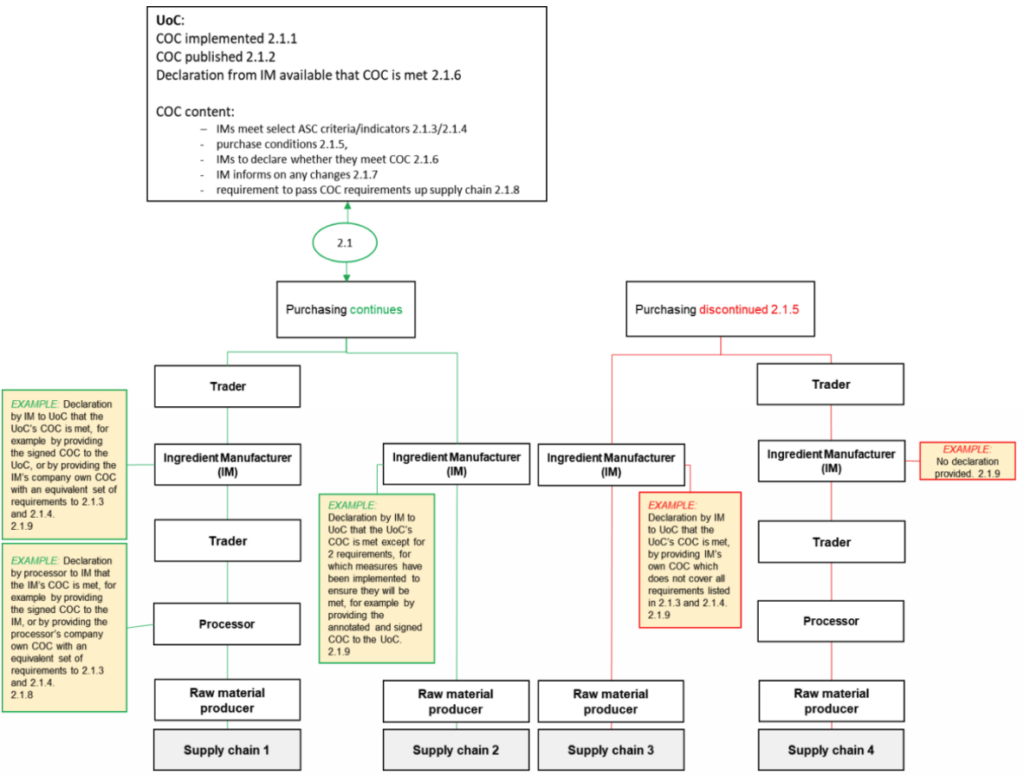
Figure 5: Illustration of how the code of conduct requirements apply along the supply chain, and implications for purchasing.
The boxes outlined in green and red are examples of Code of Conduct declarations, leading to continued or discontinued purchasing.
Declaration (2.1.6)
The Supplier Code of Conduct is considered to be met if all requirements listed in 2.1.1 are fully met or measures have been implemented to ensure they will be met against a time-bound action plan (see Feed Standard Annex 7, figure 4, step 4).
If the ingredient manufacturer declares compliance against an equivalent Code of Conduct, which the feed mill has found to be equivalent through an own internal and documented benchmark, then this also complies with 2.1.6. The same applies to the ingredient manufacturer’s suppliers.
The declaration could be obtained either as a signed copy of the Supplier Code of Conduct, or by email acknowledgment, or through inclusion in a purchase contract with explicit reference to the Supplier Code of Conduct.
Ingredient manufacturer’s suppliers (2.1.8)
The feed mill verifies that its ingredient manufacturers have a Supplier Code of Conduct which includes the all the requirements within 2.1.1. and that they have a system in place to check that the Supplier Code of Conduct has been signed. For example, the ingredient manufacturer demonstrates its supplier approval process.
Auditing considerations
The auditor will verify that the Supplier Code of Conduct sent out to the ingredient manufacturers meets the requirements as described in Criterion 2.1 of the Standard.
The auditor may ask the mill for their list of Ingredient Manufacturers (see also Indicator 2.2.2). The auditor can then use this information to sample a number of Supplier Code of Conduct documents to verify that the feed mill has identified and sent a copy of the Supplier Code of Conduct to each Ingredient Manufacturer on the list. They can also verify that a time-bound action plan has been submitted for any Indicators an ingredient manufacturer has declared they have not met.
The auditor could also query if there is there a process or procedure in place for the mill to follow up with ingredient manufacturers who have received but not returned the Supplier Code of Conduct.
Another triangulation point could be, as part of the review of Eligible Ingredients in Principle 3 of the Standard, the auditor could request the Supplier Code of Conduct for the ingredient manufacturers for relevant supplied eligible ingredients.
The auditor verifies that the feed mill has a process to check their ingredient manufacturers have passed on an equivalent set of requirements with the same intention to their suppliers.
Due Diligence
Which Feed Standard Criterion does this apply to?
Criterion 2.2 – The UoC conducts Due Diligence on ingredient manufacturers and primary raw material production.
What is the intent of this Criterion?
The feed mill conducts Due Diligence on ingredient manufacturers and primary raw material production to identify and manage any serious socio-environmental risks.
Which RUoC sections need considering?
How do I interpret the Requirements?
Due Diligence Requirement:
Throughout the Interpretation Manual, this red box with a magnifying glass indicates that the Criterion also applies to the feed mill’s ingredient manufacturers (as per Indicator 2.2.5) and primary marine/plant raw material production (as per Indicator 2.2.6).
Who is subject to Due Diligence?
Ingredient manufacturers
Ingredient manufacturers who produce ingredients that represent >1% of the total annual ingredient-weight (volume) received by the Feed mill for use in aquafeeds are subject to Due Diligence. Due Diligence is not required for ingredients that represent ≤1% so that the burden on the Feed mill to assess a large number of associated supply chains is reduced and low quantities are likely to have a lower level of risk. If the Feed mill also produces livestock/poultry feed, the received volume is based on the ingredient volume destined for inclusion in aquafeed.This includes manufacturers of marine-based ingredients, plant-based ingredients and feed stuffs (e.g., land animal, algae, insects based). Ingredient manufacturers of feed additives are excluded from the requirement to perform a Due Diligence (e.g., premixes, vitamins, minerals, trace elements and colourants). Note that feed mills producing their own premixes are not required to conduct Due Diligence on feed materials sourced if they are used as carriers within the premix.
Ingredient manufacturer refers to the company/facility that is involved in the majority processing of the ingredient i.e., does not refer to pre-processing or repacking for example. Moving up the supply chain, the ingredient manufacturers’ suppliers e.g., pre-processors, are covered through the code of conduct (Criterion 2.1) as they sign the ingredient manufacturers’ code of conduct.
Primary raw material production
The production of plant or marine based primary raw material from agriculture or from fishing is also subject to Due Diligence. Primary raw materials have not been subjected to processing, and examples are: whole fish, krill, squid, soy, corn, wheat, rice, oil palm, rapeseed/canola, barley, rye, linseed, lupines, legumes, sunflower.
By-products derived from aquaculture and ingredients from by-catch retained under the EU landing obligation are excluded from primary raw material Due Diligence. The aim of the EU landing obligation is to eliminate discards by encouraging fishers to fish more selectively and to avoid unwanted catches. By-catch retained under the EU landing obligation is excluded from Due Diligence because fishmeal/fish oil will include this bycatch, and if documented correctly/legally, this fishmeal/fish oil will also contain red listed species, which without this exception would impact on the Due Diligence. To avoid a fishery failing the Due Diligence because it is complying with the landing obligation, this exception was added, so that auditors do not penalise fishmeal/fish oil which is correctly documented in terms of species content and is discouraging wasteful practices.
In the case of ingredients derived from algae, insects or land animals (e.g., omega 3 from microalgae, insect meal, feather meal, blood meal, bone meal, haemoglobin powder), Due Diligence only extends to the ingredient manufacturer – not to the primary raw material producer (e.g., livestock farm). Future versions of the Standard may require raw materials derived from livestock to be assessed.
Table 14: Example of where Due Diligence assessments occur
| Ingredient | Primary Raw Material | Ingredient Manufacturer DD required? | Primary Raw Material DD required? |
| Fishmeal from whole fish (fishery) | Whole fish | Yes | Yes |
| Fishmeal from trimmings (fishery) | Whole fish | Yes | Yes |
| Fishmeal from trimmings (aquaculture) | Whole fish | Yes | No |
| Fishmeal from EU by-catch | Whole fish | Yes | No |
| Wheat gluten | Wheat | Yes | Yes |
| Soy lecithin | Soy | Yes | Yes |
| Insect meal | Black Soldier Fly | Yes | No |
| Algae oil | Algae | Yes | No |
| Poultry blood meal | Chicken | Yes | No |
| Minerals | Feed Additive | No | No |
List of ingredients (2.2.2, 2.2.3 and 2.2.4)
When determining the country(ies) and fishery(ies) of origin of primary raw material, the feed mill identifies where primary production or fishing occurs. For example, soy grown in Brazil and then processed in Argentina has Brazil as its country of origin for the primary raw material. The farm or cooperative where the primary raw material is produced is also listed if known. If the primary raw material is from multiple countries through one ingredient manufacturer, all countries of origin are listed.
Primary raw material is defined at a species level, not category level. For example, ‘whole fish’ is not sufficient and would need to be identified as e.g., Peruvian anchoveta (Engraulis ringens). Ingredients containing mixed species, e.g., fishmeal from trimmings, are accepted if all possible species are listed. Fisheries are identified using the FAO Fishing Area classification, including subarea and division.
Ingredients derived from algae, insects or land animals do not need to have the country of origin identified (this may change in future versions of the Standard). See the table below for an example of how a feed mill keeps an internal list of ingredients.
Table 15: Example internal listing of ingredients
| Ingredient | Name & contact of ingredient manufacturer | Primary Raw Material | Country or Fishery of Origin |
| Fishmeal from whole fish (fishery) | John Smith Big Fish Company Email/Phone Address/GPS Website | Peruvian anchoveta (Engraulis ringens) | FAO 87 Northern Border of the Peruvian EEZ to 16 ‘South |
| Fishmeal from trimmings (fishery) | John Smith Big Fish Company Email/Phone Address/GPS Website | Atlantic herring (Clupea harengus) | FAO 27.4 North Sea |
| Fishmeal from trimmings (aquaculture) | John Smith Big Fish Company Email/Phone Address/GPS Website | Atlantic salmon (Salmo salar) | Norway |
| Wheat gluten | Jane Brown Plant Company Email/Phone Address/GPS Website | Wheat (Triticum aestivum) | Ukraine |
| Soy lecithin | Jane Brown Plant Company Email/Phone Address/GPS Website | Soy (Glycine max) | BrazilArgentina |
| Insect meal | Sam Roberts Bug Company Email/Phone Address/GPS Website | Black Soldier Fly (Hermetia illucens) | N/A |
| Algae oil | Paul Williams Seaweed Company Email/Phone Address/GPS Website | Micro Algae (Schizochytrium sp.) | N/A |
| Poultry blood meal | Hannah Jones Animal Company Email/Phone Address/GPS Website | Whole poultry (Gallus gallus domesticus) | N/A |
| Phosphates | N/A | N/A | N/A |
What do better practices look like?
The feed mill keeps an internal list of the production origins of all ingredients if known. The feed mill also records additional production information, e.g., for marine ingredients: fishing vessels details, flag state fishing gear and landing port; farm name and location for ingredients derived from aquaculture.
If not known, the feed mill takes steps to determine production origins and/or further details.
The next version of the ASC Feed Standard will likely require more traceability.
The feed mill publishes the list annually, without the ingredient manufacturer details, covering ingredients received throughout the previous year. For example, the list of ingredients received throughout 2021 is published at the end of 2022. This helps to safeguard corporate intelligence.
For ingredients sourced from the start of the second certification cycle onwards, the feed mill includes the production region(s) within the country(ies) of primary raw material production for terrestrial plant-derived ingredients. Note that a certification cycle is 3 years. A region is a geographical area in which all farms that may be the source of a defined primary raw material are located. For example, wheat from Southern Ukraine or Kherson, Ukraine; soy from Central-west Brazil or Mato Grosso, Brazil. The feed mill defines the region and it will be the same as the defined region for the Due Diligence pathway 2 (if used).
A template is provided on the ASC website which illustrates the level of information which is to be published. Its use is optional for feed mills that have no own or better mechanism.
Ingredient manufacturer and primary raw material production Due Diligence (2.2.5 and 2.2.6)
In order to pass Due Diligence, all risk factors (as per table 1, Annex 3 of the Feed Standard) need to be ‘low risk’ which may mean using a combination of the pathways when conducting Due Diligence on an Ingredient Manufacturer or Primary Raw Material Production.
In exceptional cases, segregation of primary raw material does not occur down to the region, country or fishery level. In this case, all regions within a country/ all countries/ all fisheries of potential origin must be listed and covered by the Due Diligence. The resulting risk score is the highest risk of all.
Four different pathways can be selected to assess/determine the risk level, and the selection of pathway can have implications for traceability. The level of traceability required depends on the pathway used, for example, if country score cards are used, traceability goes down to the country level, or if the sector assessment is used traceability may go down to the/a group of primary raw material production. If a feed mill wants to source from a well-performing farm within a high-risk country (as per the country score card), and there is no third-party certified material available and the entire sector is experiencing issues, then traceability would need to extend down to the individual farm level.The pathways vary in their ease of implementation, direct cost of assessment and required competency level of those carrying out the Due Diligence.
Table 16: Comparison of the Due Diligence pathways
| Pathway 1: Country Risk Score Card | Pathway 2: Industry/ Sector/ Fishery Assessment | Pathway 3: Ingredient Manufacturer Assessment | Pathway 4: Certification | |
| Ease of implementation? | Easy – reading scores | More difficult – requires collecting & reviewing evidence | More difficult – requires collecting & reviewing evidence | Easy – reading list of accepted schemes |
| Direct cost associated with assessment? | No | Yes – time and potentially outsourcing to consultant | Yes – time and potentially outsourcing to consultant | Yes – sourcing certified material |
| Specific competency level required? | No | Yes | Yes | No |
When is the Due Diligence assessment to be repeated?
As described in Feed Standard Annex 3, the DD assessment is repeated when:
- monitoring indicates a different risk level than previously determined,
- monitoring indicates that measures implemented are not effective,
- significant changes occur, which could affect the risk level previously determined,
- in all cases, at least every certification cycle (3 years).
Pathway 1: Country Score Cards
The link to the country score card can be found here. If a primary raw material is produced in, or an ingredient manufacturer is located in a country with all risk factors categorised as ‘low risk’ then Due Diligence has been passed. However, further Due Diligence is required under a different pathway for any risk factor not determined to be ‘low risk’.
If using the country score card to assess an Ingredient Manufacturer, the feed mill applies the country in which the ingredient manufacturer is based. For assessing Plant-based Primary Raw Material Production, it is the country in which the plant was produced/grown. For assessing Marine-based Primary Raw Material Production, the country scope to be applied depends on whether the Flag State of the species caught is known (see the Country Score Cards for further detail).
The methodology behind the country score card can be found here.
Pathway 2: Sub-national/sectoral assessment (for plant-based primary raw material production) / Industry/sector assessment (for ingredient manufacturer)/ Fishery assessment (for marine-based primary raw material production)
- Supply Chain Mapping
The feed mill maps its relevant supply chains as far back as possible by requesting information from ingredient manufacturers on their own suppliers via self-assessment questionnaires, document review and gathering data from procurement or technical employees.
What do better practices look like?
Although it may not be possible for the feed mill to map out every supply chain to the primary raw material level, it is encouraged to do so to meet potential future obligations under the proposed EU Deforestation Regulation for soy and palm oil, as well as other Due Diligence regulation. Future versions of this standard will likely require more in-depth risk assessments to be carried out and a corresponding level of traceability demonstrated.
- Assessing the risk
- For ingredient manufacturers and/or plant-based primary raw material production
The feed mill conducts the assessment of the risk factor(s) in a successive manner, beginning with a high-level analysis and moving to more granular assessments where warranted based on the initial findings i.e., if low risk cannot be determined at a broader scale. In parallel, traceability processes also move towards finer-scale information (i.e., tracing to specific supply units, closer to origin) when risk assessments indicate that this may be necessary to demonstrate low risk for individual primary raw material production in a higher risk sector.
For example, the high-level analysis may indicate that an ingredient manufacturer or farm is high risk for forced labour due to the prevalence of vulnerable migrant workers in the country and sector. However, the ingredient manufacturer or farm may not employ any migrant workers at all, or it may have robust processes for recruiting and supporting migrant workers.
See the table below for the example escalating level of traceability.
Table 17: Example escalating level of traceability.
| Subject of Assessment | Type of assessment | Level of traceability(start at level 1 and if low risk cannot be determined then proceed through the levels as needed) | Example evidence |
| Ingredient manufacturer | Industry/sector | 1. Manufacturer of same ingredient/ingredient type within a country e.g., soymeal manufacturers within Argentina. | 3rd party report (published within the past 5 years) which addresses the risk factor under assessment. |
| 2. Industry association (if ingredient manufacturer is a member) e.g., ABIOVE, the Brazilian Association of Vegetable Oil Industries. | Membership of the association requires evidence of mitigating against the risk factor under assessment e.g., having polices in place, being audited, regular reporting, etc. | ||
| 3. Ingredient Manufacturer | See Pathway 3. | ||
| Plant-based primary raw material production | Sub-national/ sectoral | 1. Raw material sector within a region e.g., soy from Mato Grosso, Brazil. | 3rd party report (published within the past 5 years) which addresses the risk factor under assessment. |
| 2. Groups of production units located in close geographic proximity and under common management. | Auditing and reporting requirements for members, GIS data, interviews with employees, etc. which address the risk factor under assessment. | ||
| 3. Production units, i.e., farms, plantations, farmer groups. | Site visits, interviews with employees, GIS data, etc. which address the risk factor under assessment |
A high-level analysis (level 1 traceability in the table above) of the risk factors is conducted through desk-based methodology that uses existing risk screening tools and other secondary sources of data. A granular risk assessment (level 2+ traceability in the table above) of the risk factors is a more detailed analysis that utilises additional secondary and primary sources of data about the sourcing area/industry, is based on more precise location and boundary data for suppliers, and/or considers other supplier characteristics that may affect risk levels. Additional data may be obtained through interviews with stakeholders and other subject matter experts, as well as with employees of the ingredient manufacturer/production unit. Due Diligence which involves granular risk assessments using primary data sources is conducted by individuals (can be internal staff or external consultants) who meet the competency requirements listed in Annex C of the RUoC. Individuals using published reports do not need to meet the competency requirements listed in Annex C.
The tables below provide further recommended Indicators of low risk and suggested sources and processes to assess the risk factors.
Table 18: Indicators of low risk for legal and environmental risk factors of plant-based primary raw material
| Risk Factor | Indicator of low risk | Suggested sources and processes to assess risk |
| The risk that primary raw material originates from areas affected by poor regulatory oversight resulting in systematic violations of land use or environmental laws and regulation within the plant-based primary raw material production. | The farm is located in an area where standards of forest and land use governance and law enforcement are strong. | – Assessments of the status of governance and law enforcement in the source region |
| The farm is located in an area where Indigenous rights are enforced, and land tenure rights are clearly defined | – Assessments of the status of Indigenous rights and land tenure in the source region, e.g., LandMark map, implementation of Voluntary Guidelines on the Responsible Governance of Tenure (VGGT) through LandPortal | |
| The risk that primary raw material originates from areas resulted from illegal deforestation/conversion. | The farm is located in an area with a low rate/ incidence of illegal deforestation and/or land conversion. | – Remote sensing (e.g., satellite or radar) data, – Deforestation alerts – FAO Forest Resources Assessment series – Independent or community forest monitors. – Local communities, Indigenous Peoples and civil society organisations – Country or landscape risk assessments. – Information collected through grievance mechanisms |
Sources: OECD-FAO Guidance for Responsible Agricultural Supply Chains (2016);
Table 19: Indicators of low risk for legal and environmental risk factors of ingredient manufacturers
| Risk Factor | Indicator of low risk | Suggested sources and processes to assess risk |
| The risk that the ingredient manufacturer does not meet the following Indicator:1.1.1 legal licenses and permits, by operating in an area affected by poor regulatory oversight resulting in systematic violations of laws and regulation. | The ingredient manufacturer is located in an area where governance and law enforcement are strong. | – Assessments of the status of governance and law enforcement in the source region. |
| The risk that the ingredient manufacturer does not meet the following Criteria:1.17 appl. environmental regulations1.18 water use1.19 waste handling1.20 effluent handling | The ingredient manufacturer measures and manages its water use, waste and effluent handling. | – Document review – Site visit – Interviews with key stakeholders/employees. |
| The risk that the ingredient manufacturer does not meet the following Indicators:3.4.2 GMO disclosure3.4.3 disclosure of medicinal additives | The ingredient manufacturer discloses the presence of GMO and medicinal additives to all buyers of the product. | – Document review – Site visit – Interviews with key stakeholders/employees. |
Table 20: Indicators of low risk for social risk factors of plant-based primary raw material and ingredient manufacturers
| Risk Factor | Indicator of low risk | Suggested sources and processes to assess risk |
| The risk that primary raw material is produced using forced labour or worst forms of child labour. The risk that the ingredient manufacturer does not meet the following Criteria:1.3 appl. labour regulations1.4 forced labour1.5 children and young workers | The farm/ingredient manufacturer is located in a country which has ratified the ILO fundamental conventions and has a strong record of implementation. | – ILO’s NORMLEX website on country ratification and supervision. |
| The farm/ingredient manufacturer is located in a country which does not have prison labour policies and programmes. | – Country research | |
| The farm/ingredient manufacturer is located in a country which does not have state-orchestrated programmes including but not limited to: mass mobilisation for large-scale national development programmes (particularly in centrally-planned economies).labour and/or vocational programmes targeted at persons belonging to minorities (e.g., ethnic or religious). | – Country research | |
| The farm/ingredient manufacturer is not located in an area with limited access to schools. | – Area research – Interviews with key stakeholders/employees. | |
| The farm/ingredient manufacturer does not employ migrant workers, particularly irregular migrant workers. | – Document review – Site visit – Interviews with key stakeholders/employees. | |
| The farm/ingredient manufacturer does not recruit employees via third parties, including government recruiters. | – Document review – Site visit – Interviews with key stakeholders/employees. | |
| The farm/ingredient manufacturer does not charge recruitment fees. | – Document review – Site visit – Interviews with key stakeholders/employees. | |
| The farm/ingredient manufacturer does not have credit-arrangements and debt schemes for employees. | – Document review – Site visit – Interviews with key stakeholders/employees. | |
| The farm/ingredient manufacturer does not provide family accommodation onsite. | – Document review – Site visit – Interviews with key stakeholders/employees. | |
| The farm/ingredient manufacturer does not employ workers under age 18. | – Document review – Site visit – Interviews with key stakeholders/employees. | |
| The risk that the ingredient manufacturer does not meet the following Criteria:1.6 discrimination | The ingredient manufacturer has effective communication, procedures, and monitoring in place to ensure harassment, abusive or exploitative behaviour does not occur in the workplace. | – Document review – Site visit – Interviews with key stakeholders/employees. |
| The risk that the ingredient manufacturer does not meet the following Criteria:1.13 grievance mechanism | The ingredient manufacturer has an effective grievance mechanism in place. | – Document review – Site visit – Interviews with key stakeholders/employees. |
Sources: OECD-FAO Guidance for Responsible Agricultural Supply Chains (2016); Guidance on Due Diligence for EU businesses to address the risk of forced labour in their operations and supply chains (2021)
b) For marine-based primary raw material production
Due to the complexity of marine ingredient supply chains and the lack of publicly available data and sector reports, the risk assessment process is different to that of ingredient manufacturers and plant ingredient supply chains.
For whole fish derived ingredients, the feed mill conducts an assessment of the risk factors(s) by following the recommendations to determine low risk within Section 4 (Fisheries and fishing operations) of PAS 1550:2017 ‘Exercising Due Diligence in establishing the legal origin of seafood products and marine ingredients – Importing and processing – Code of practice. The table below specifies which PAS 1550:2017 sections relate to which risk factor. This fishery assessment is conducted by individuals who meet the competency requirements listed in Annex C of the RUoC.
Table 21: Fishery assessment for risk factors of whole fish derived marine ingredients
| Risk Factor | PAS 1550:2017 Section(s) |
| Legal: The risk that primary raw material originates from areas affected by poor regulatory oversight resulting in systematic illegal fishing within the fishery. | 4.2 Fisheries access control 4.3 Monitoring, control and surveillance 4.4 Source fishing vessels 4.5 Transhipment 4.6 Landing at port (4.6.1 and 4.6.2) |
| Social: The risk that primary raw material is produced using forced labour or worst forms of child labour. | 4.2 Fisheries access control 4.4 Source fishing vessels 4.5 Transhipment 4.6 Landing at port (4.6.3) 4.7 Decent working conditions in the fishing sector |
| Environmental: The risk that primary raw material originates from unreported or unregulated fishing. The risk that primary raw material originates from species that are IUCN endangered or critically endangered species.The risk that primary raw material originates from species caught that appear in the CITES appendices. | 4.1 Management of fisheries 4.2 Fisheries access control 4.3 Monitoring, control and surveillance 4.4 Source fishing vessels 4.5 Transhipment 4.6 Landing at port (4.6.1 and 4.6.2) |
For marine by-product ingredients, the feed mill conducts the assessment of all the risk factors by following, at a minimum, the recommended Indicators of low risk as shown in the table below. Note that as the prevalence of IUU fishing is a proxy for labour issues and the fishing of endangered species, all risk factors are assessed together.
Table 22: Fishery assessment for risk factors of by-product derived marine ingredients
| Indicator of low risk |
| The coastal state EEZ, FAO Area or RFMO where the fish was caught is known. |
| The coastal state EEZ or RFMO where the fish was caught maintains a register of authorised vessels. |
| The coastal state EEZ or RFMO where the fish was caught issues licenses in a transparent manner i.e., the application process is published and the list of all licensed vessels is publicly available on a website. |
| The coastal state EEZ or RFMO where the fish was caught has fishing quotas and other seasonal, temporal or technical catch restrictions that are publicly available on a website. |
| The coastal state EEZ or RFMO where the fish was caught operates sanctions on fishing vessels for IUU fishing or illegal labour practices that are published on a publicly available website. |
| The coastal state EEZ or RFMO where the fish was caught applies sanctions to fishing vessels that are sufficient to deter IUU fishing and illegal labour practices i.e., fines are at least five times the value of the catch caught by the vessel during the period IUU activity took place. |
| The coastal state EEZ where the fish was caught cooperates with other states in the region as well with as flag and port states involved in the catch and distribution of seafood products caught in the coastal states’ territorial or EEZ waters i.e., that at a minimum, coastal states make known to the above parties named officials who are responsible for coastal state fisheries duties and that any requests for information from the above parties receive a full and accurate reply within 10 working days; and either physically inspect crew conditions on fishing vessels to verify that conditions for crew meet the standards established by coastal state law or have a published and defined system whereby they place reliance on particular flag states to do so in the case of distant water vessels that are unlikely to call at port in the coastal state. |
| The coastal state EEZ where the fish was caught is neither ‘pre-identified’ as non-cooperating (‘yellow card’), ‘identified’ as non-cooperating (‘red card’) or ‘listed’ by the European Union. |
| The coastal state EEZ where the fish was caught is neither identified nor certified by the USA’s National Marine Fisheries Service (NMFS) as being responsible for vessels engaged in IUU fishing. |
What do better practices look like?
ASC recognises for marine by-products it is difficult to obtain information on the landing port and vessel(s) involved. However, as technology improves visibility along the supply chain, mills can increasingly ask their suppliers to provide this information to assess against the risk factors using a more in-depth risk assessment as is used for whole-fish ingredients.
- Implement appropriate measures
If the outcome of the risk assessment does not determine low risk, the ingredient cannot be sourced until low risk is determined. The feed mill implements measures, such as:
- prevention
- mitigation
- remediation
- cease sourcing, however, where possible mitigation is preferred over the discontinuation of sourcing.
During the initial audit, the feed mill demonstrates that it has begun to implement measures, however, monitoring (as per Step 4) is not yet required.
- Implement a monitoring program
The feed mill implements a monitoring program to:
- monitor the risk factors, or Indicators for the risk factors, to ensure the risk level determined remains valid;
- monitor the effectiveness of measures implemented.
Pathway 3: Ingredient Manufacturer assessments:
The feed mill works with the ingredient manufacturer to demonstrate that the ingredient manufacturer, marine or plant-based primary raw material has a low risk for the Risk Factors detailed in Table 1, Annex 3 of the Feed Standard.
- Supply Chain Mapping
As with Pathway 2, the feed mill maps its relevant supply chains as far back as possible by requesting information from ingredient manufacturers on their own suppliers via self-assessment questionnaires, document review and gathering data from procurement or technical employees.
- Assessing the Risk
For the ingredient manufacturer risk factors, the feed mill assesses the ingredient manufacturer by requesting and reviewing the same or similar evidence the feed mill must provide when audited against the equivalent Feed Standard Indicators/Criterion. It could do this through contractual or purchasing agreements, product specifications, or supplier questionnaires.
Table 23: Example evidence used to assess ingredient manufacturer risk factors under Pathway 3
| Risk Factor | Example evidence to be reviewed by feed mill |
| Legal: The risk that the ingredient manufacturer does not meet the following Indicator: 1.1.1 legal licenses and permits, by operating in an area affected by poor regulatory oversight resulting in systematic violations of laws and regulation. | – Business license – Factory license |
| Social: The risk that the ingredient manufacturer does not meet the following Criteria:1.3 appl. labour regulations, 1.4 forced labour, 1.5 children and young workers, 1.6 discrimination, and 1.13 grievance mechanism. | – Company policies, procedures and work instructions related to labour. – age verification system – evidence of risk assessment for children/young employees – policies, procedures and records related to the recruitment process – employee contracts – anti-harassment policygrievance procedure |
| Environmental: The risk that the ingredient manufacturer does not meet the following Criteria:1.17 appl. environmental regulations, 1.18 water use, 1.19 waste handling, and 1.20 effluent handling.And Indicators: 3.4.2 GMO disclosure, and 3.4.3 disclosure of medicinal additives. | – Company policies, procedures and work instructions related to environmental operations. – Disclosure statements |
The risk factors GMO and Medicinal Additives
Note that Indicators 3.4.2 GMO disclosure and 3.4.3 disclosure of medicinal additives are listed as environmental risk factors so that countries, companies and people can make their own choice about potential impact.
For marine and plant-based primary raw material production risk factors, the ingredient manufacturer demonstrates to the mill it has an appropriate system or sufficient information to ensure low risk at the raw material production level.
Elements of ingredient manufacturer management and control systems that are reviewed include:
- risk assessments;
- supply chain mapping and traceability activities and status;
- procedures for identifying and addressing non-compliance, including grievances lodged and their status;
- activities related to responsible land acquisition and development practices, including impact assessments and the use of Free, Prior and Informed Consent (FPIC) when appropriate;
- monitoring, verification, and reporting systems—including appropriate tools, methods, and data sources—that are able to assess and communicate impacts and outcomes of their operations and supply chain.
(This list above is taken from AFi guidance)
- Implement appropriate measures
If the outcome of the risk assessment does not determine low risk, the ingredient cannot be sourced until low risk is determined. The feed mill implements measures, implemented into a time-bound action plan, such as:
- prevention
- mitigation
- remediation
- cease sourcing, however, where possible mitigation is preferred over the discontinuation of sourcing.
During the initial audit, the feed mill demonstrates that it has begun to implement measures, however, monitoring (as per Step 4) is not yet required.
- Implement a monitoring program
The feed mill implements a monitoring program to:
- monitor the risk factors, or Indicators for the risk factors, to ensure the risk level determined remains valid;
- monitor the effectiveness of measures implemented.
Pathway 4: Certification
The link to the list of accepted certification schemes can be found here. If a primary raw material or an ingredient manufacturer is certified under one of the accepted schemes with all risk factors categorised as ‘low risk’ then Due Diligence has been passed. However, further Due Diligence is required under a different pathway for any risk factor not determined to be ‘low risk’.
Note that for certified primary raw material, only Identity Preserved, Segregated and Mass Balance production/traceability chain of custody models are accepted. Certificate trading models e.g., credits, book and claim, are not accepted. Corresponding Chain of Custody certification must also be present and verified throughout the supply chain.
Purchasing raw materials certified or approved to the list of accepted certification schemes does not necessarily entitle the feed mill to make any claims relating to those standards. Feed mills wishing to make claims should contact the scheme owner for further information on their requirements.
The endangered species risk factors (marine-based primary raw material)
For certified marine-based primary raw material production, the feed mill can compare the species listed on the catch certificate against the IUCN Red List and CITES Appendix I, II, III List to demonstrate low risk for the two environmental risk factors relating to endangered species.
System to ensure low risk sourcing (2.2.8 and 2.2.9)
The feed mill does not source from supply chains where the outcome of the ASC required Due Diligence on the ingredient manufacturer and the primary raw material production indicates medium or high risk, as these are considered non-permitted ingredients. Note that non-permitted ingredients are not allowed in any aquafeeds but can be used in non-aquafeeds.
Due Diligence and Pathways Report (2.2.10)
Feed mills use the template provided on the ASC website to annually report to ASC an overview of the outcome of the Due Diligences carried out and the respective pathways chosen.
Sectoral/fishery Assessment or Ingredient Manufacturer Assessment Summary Report (2.2.11)
In all cases where the pathways “sectoral/fishery assessment” or “ingredient manufacturer assessment” are chosen, the feed mill publishes and shares with ASC an up-to-date summary report using the template provided on the ASC website.
Auditing considerations
The auditor will verify the that the feed mill maintains a list of ingredients as per the Standard Requirements and relevant information is published. The auditor will also verify that the reporting requirements to ASC have been completed.
The auditor refers to the Due Diligence Sampling Calculator to determine how many DD assessment reports to sample from each pathway. For each report sampled, the auditor verifies the following:
- That the fishery of origin (if applicable) is as determined by the feed mill as per the following process:
- Review all available traceability documents, for example: bills of lading, invoices, delivery notes, health certificates/veterinary checks, catch certificates, purchase orders, and packing list/loading records for every change of ownership;
- If the raw material is sourced from a certified or scheme approved fishery, then in place of point a), the auditor verifies the validity of all certificates of certified organisations in the supply chain that legally owned the certified products from the fishery to the mill (i.e., verify the Chain of Custody is maintained).
- That the country/region of origin (if applicable) is as determined by the feed mill as per the following process:
- Review all available traceability documents, for example: bills of lading, invoices, delivery notes, purchase orders, and packing list/loading records for every change of ownership;
- If the raw material is sourced from a certified or scheme approved farm(s), then in place of point a), the auditor verifies the validity of all certificates of certified organisations in the supply chain that legally owned the certified products from the farm(s) to the mill (i.e., verify the Chain of Custody is maintained).
- That the risk level determined by the feed mill is supported by the Due Diligence pathway used and the evidence provided.
- That for ingredients determined not to be low risk, the feed mill has implemented appropriate measures to achieve low risk before sourcing.
The auditor will also verify that a monitoring program has been implemented and that Due Diligence is repeated when required as per the Standard (not applicable for initial audits).
Useful resources
AFi guidance on Supply Chain Engagement and Monitoring & Verification: https://accountability-framework.org/contents-of-the-framework/monitoring-and-verification/
AFi guidance on Achieving Commitments Through Collaboration (including jurisdictional initiatives): https://accountability-framework.org/operational-guidance/achieving-commitments-through-collaboration/
Seafish Guide to Illegal, Unreported and Unregulated (IUU) Fishing: https://www.seafish.org/document/?id=64546167-9781-464a-a1dd-29bb5e0ef3f0
OECD-FAO Guidance for Responsible Agricultural Supply Chains: https://mneguidelines.oecd.org/rbc-agriculture-supply-chains.htm
AASC Vocabulary
Follow this link to the ASC Vocabulary Portal
BAuditor Qualifications and Competencies
All auditors shall possess the attributes described in clauses 4, 7.2.2 and 7.2.3.2.a in ISO 19011:2018.
Table A – Feed Auditor qualifications and competencies
Auditors evaluating feed requirements in ASC audits shall possess the following qualifications and competencies.
| Qualification/Competency | Requirement |
| 1. Education | a) The individual shall have at least a post-high school diploma or equivalent (minimum course duration of two (2) years) obtained in a discipline related to the scope of certification; (e.g., feed manufacturing / Milling / Animal Nutrition); OR b) In exceptional cases practical experience[8] can be regarded as equivalent. These cases shall be documented. |
| 2. Work Experience | a) The individual shall have at least three (3) years of experience relevant in a feed / animal nutrition related discipline in a production / manufacturing environment. b) The individual shall have experience in conducting or auditing risk assessments. (E.g., food/feed safety, environmental risk assessments). |
| 3. Language | a) Unless accompanied by an independent interpreter, the individual shall be a fluent speaker and reader of the language(s) used by managers, administrators and workers of the UoC being audited. b) The individual shall communicate effectively through an interpreter. c) The individual shall have knowledge of the technical language employed in the manufacturing / production of feed products. |
| 4. Audit training | a) The individual shall have successfully completed a Lead Auditor training course based on ISO 19011 principles that has a minimum duration of thirty-seven (37) hours. The certificate shall specify the course content and duration. Successful completion shall be indicated on the certificate. The Lead Auditor training course shall cover: applicable standards on quality auditing, auditing techniques, focus of the audits (psycholoical aspects and communication) and reporting, it shall also include a practical case study, AND b) The individual shall have undertaken and successfully completed an ASC approved auditor training course or courses in relation to specific standard and certification requirements, as required by the ASC, AND c) The individual shall complete the ASC training for new requirements as specified by the ASC within the deadlines set by ASC. |
| 5. Audit Experience | a) The individual shall initially have completed a minimum of ten (10) days of on-site audit experience in conducting audits (either for, animal feed, (e.g., GlobalG.A.P CFM, GMP+, BAP,) food safety or environmental third-party certification audits); OR The individual shall have actively participated in at least two (2) ASC feed audits as a trainee, AND b) The individual shall have undertaken at least one (1) satisfactory ASC audit witnessed by the CAB’s competent ASC feed auditor before final sign-off; Link to Variance request QA0434_Feed_Feed CAR v1.0.1_Table A 5. b) c) The individual shall be witnessed by the CAB’s competent feed auditor at least once every 3 years to maintain ASC auditor qualification. |
Table B – Social auditor qualifications and competencies
Auditors evaluating social requirements in ASC audits shall possess the following qualifications and competencies.
| Qualification/Competency | Requirement |
| 6. Social auditing qualification | The individual shall have one or more of the following qualifications or equivalent in content and duration: a) Has successfully completed a SAAS approved 5-day SA8000 basic auditor course, OR b) Has successfully completed the Verité five day “EICC Labour & Ethics Lead Auditor Course”, OR c) Is an APSCA-approved auditor with category Certified Social Compliance Auditor (CSCA) |
| 7. Social auditing experience | a) The individual shall have participated as an active audit team member in at least five (5) third party audits for one or more of the following schemes, at least two (2) of which are audits in manufacturing facilities: Link to Variance request QA0420_Feed_Feed CAR v1.0.1_Table B 7. a)
c) The individual shall be witnessed by the CAB’s competent social auditor for any of the schemes listed in requirement7 (a), at least once every 3 years to maintain the ASC social auditor qualification. |
| 8. ASC Social Auditor Training | a) The individual shall have undertaken and successfully completed an ASC Social Auditor training course, or courses in relation to specific standards, as required by the ASC. |
| 9. Competencies | a) The individual shall have knowledge of local labour and human rights legislation b) The individual shall have familiarity with local customs c) The individual shall speak and read the primary local language, unless an independent interpreter makes up part of the audit team d) The individual shall be proficient in the language of the audit (at least at level B2 according to the Common European Framework of Reference for Languages (CEFRL), if the language is not native to the social auditor e) The individual shall be able to manage relationships with workers and managers. |
| 10. Continuous professional development | a) The individual shall conduct at least 3 social audits for any of the schemes in 7a per year b) The individual shall take part in ASC annual social auditor calibration session c) The individual shall attend update training or session on topics related to ASC social requirements. |
| 11. Qualifications for ASC feed auditors evaluating social criteria | ASC feed auditors evaluating ASC social criteria allowed by the “ASC social audit risk calculator” shall have the following qualifications: a) The individual shall maintain their ASC feed auditor qualifications. b) The individual shall have undertaken and successfully completed an ASC Social Auditor training course, or courses in relation to specific standards, as required by the ASC. c) The individual shall have participated in at least two (2) ASC social audits under the supervision of an ASC social auditor to gain experience in employees interview techniques and employees file sampling. d) The individual shall have undertaken at least one (1) satisfactory ASC social audit, witnessed by a competent ASC social auditor, before final sign-off. e) The individual shall be witnessed by a competent ASC social auditor for the ASC program, at least once every 3 years to maintain the ASC social auditor qualification. |
Table C – Lead Auditor qualifications and competencies
In addition to the requirements of tables A OR B lead auditors leading ASC audits shall possess the following qualifications and competencies.
| Qualification/Competency | Requirement |
| 12. Audit Training | a) If the lead auditor is a social auditor, the individual shall have successfully completed a Lead Auditor training course based on ISO 19011 principles that have a minimum duration of thirty-seven (37) hours. The certificate shall specify the course content and duration. Successful completion shall be indicated on the certificate. The Lead Auditor training course shall cover: applicable standards on quality auditing, auditing techniques, focus of the audits (psychological aspects and communication) and reporting, and it shall also include a practical case study. |
| 13. Auditor Competency | a) The audit team leader should have acquired additional audit experience to demonstrate the competencies described below: i. Plan the audit and assign audit tasks according to the specific competence of individual audit team members. ii. Develop and maintain a collaborative working relationship among the audit team members. – iii. Manage the audit process, including:
v. Prepare the audit report in conjunction with the audit team. |
Footnotes
8. Experience can take the form of positions held, (For example, positions in quality assurance, production, feed safety, product inspection, plant manager, etc.). It could also be previous experience in auditing.
CAudit Report Requirements
General Requirements
C1. Audit reports shall be written in English and in the most common language spoken in the areas where the operation is located.
C1.1. The CAB may submit only a report in English for audit reports of UoCs located in countries evaluated as Very High in the latest report by the EF English Proficiency Index.
C2. Audit reports may contain confidential annexes for commercially sensitive information.
C2.1. The CAB shall agree the content of any commercially sensitive information with the applicant, which shall be submitted separately to the ASC and be accessible to the appointed accreditation body upon request, as stipulated in the certification contract.
C2.2. The public report shall contain a clear overview of the items which are in the confidential annexes.
C2.3. Except for the annexes that contain commercially sensitive information, all audit reports will be public including unannounced audit reports.
C3. The CAB is solely responsible for the content of all reports, including the content of any confidential annexes.
C4. The CAB shall submit to the ASC, audit reports or summaries of non-conformities for failed audits or audits that resulted in the suspension, cancellation or withdrawal of a certificate.
C4.1. The CAB shall submit the completed Desk Review Form (Annex G) together with the final audit report. The Desk Review Form will not be published.
C4.2. The CAB shall submit as a minimum, a summary of non-conformities in English of each failed audit within 28 days from the date of the closing meeting or last on-site date.
C4.3. The ASC shall keep these reports published for 12 months and make them available upon request after this period.
C5. The CAB shall include a record of changes if a published final report is updated or corrected.
C6. Audit reports shall contain accurate and reproducible results.
Reporting Deadlines* for certification and re-certification audit reports
C7. Within forty-two (42) days of the completion of the audit the CAB shall submit a draft report written in English and the national or most common language spoken in the area where the operation is located.
C8. Within seven (7) days the ASC should post the draft report to the ASC website.
C9. The CAB shall allow Stakeholders to comment on the report for twenty-one (21) days.
C10. Within twenty-eight (28) days of the close of comments, the CAB shall submit the final report to the ASC written in English and the national or most common language spoken in the area where the operation is located.
C11. Within seven (7) days the ASC should post the final report to the ASC website.
Reporting Deadlines* for surveillance audit reports
C12. Within twenty-eight (28) days of completing the audit, the CAB shall submit a summary of the non-conformities detected during the surveillance audit in English.
C13. Within ninety-eight (98) days of completing the audit, the CAB shall submit a final report written in English and the national or most common language spoken in the area where the operation is located.
C14. Within seven (7) days the ASC should post the final report to the ASC website.
*Refers to calendar days
DCommunication with the ASC
D1. Language
D1.1. All CAB communication with the ASC shall be in English.
D2. Forms
D2.1. CABs shall use the ASC database to submit Client and CAB information relevant to the Certification Process.
D2.2. Requests for interpretation of the ASC Requirements and requests for variance to these normative requirements shall be made by CABs via the Variance Request & Interpretation Platform.
D3. Public Information
D3.1. The CAB is responsible for control of all confidential information submitted to the ASC on forms that specify public disclosure.
D4. Format
D4.1. Information shall be submitted in the formats specified by the ASC
EASC Certification for Multi-site UoC
E1. Scope
E1.1 In addition to the requirements in this document, this annex shall be used by CABs to audit Multi-site UoCs.
E2. Initial Audit
E2.1. The CAB shall conduct an initial audit of Multi-site Clients as follows
- All sites shall be in operation and where possible producing ASC product
- All sites meet the conditions specified in part B, Section 8 of this document ‘Audit Timing’ and associated pre-requisites.
- Include on-site visits of ALL sites in the unit of certification.
- Employee interviews conducted according to Social Audit Risk Assessment Calculator (Annex H).
- Files and records shall be sampled at a rate to be established by the CAB taking into account that threats and risk level of the unit of certification are yet to be identified and assessed at the end of the initial audit.
E3. Sites
E3.1. Only sites that are in operation shall be included in the unit of certification of a Multi-site applicant.
E3.2. Sites that are certified under an existing ASC certificate may be added to the scope of a valid Multi-site certificate without a CAB audit if:
- The site has received a CAB audit within 12 months from the date of proposed inclusion in Multi-site certificate, and
- There are no open major or critical non-conformities.
E3.2.1. The CAB shall ensure that subsequent audits under the new certificate adhere to relevant CAR Requirements to ensure the certification cycle is maintained.
E3.3. Sites may be removed from the scope of an initial audit by the CAB at the request of the Client.
E3.3.1. Removed sites and reason(s) for removal shall be included in the audit report.
E3.3.2. Audit findings of sites removed after the initial on-site audit shall be documented in the audit report.
E3.3.3. Sites that are removed from the scope of an initial audit may only be added to the scope of the certificate at a surveillance, recert or scope extension audits fulfilling the requirements of section 8 (Audit Timing), section 10 (Stakeholder Engagement) and Annex C (Audit Report Requirements) applicable to initial audits.
E3.4. Sites may be removed from the scope of an existing certificate by the CAB
- due to a major non-conformity that is not closed out in due time, OR
- due to not complying with applicable local regulations as notified by the Client.
E3.5. The CAB shall follow the requirements in section 32 (Suspension, cancellation and withdrawal of certification) of this document when removing sites from a certificate.
E3.6. Reason(s) of site removal from a certificate shall be documented in the next audit report.
E3.7. Sites removed from a certificate may be added to the scope of the certificate once the CAB confirms that:
- all outstanding non-conformities are closed following an agreed timeframe between the Multi-site Client and the CAB and
- the site complies with applicable requirements.
E3.8. New applicant sites may be added to an existing Multi-site certificate only after a CAB initial on-site audit has been conducted and all open major or critical non-conformities are considered closed by the CAB.
E3.9. The CAB shall prepare a map of the location and boundaries of each site that are included in the unit of certification.
E3.9.1. The map of all sites within the unit of certification shall be included in the audit report.
E3.9.2. The location and name or ID of each site in the unit of certification shall be appended to the certificate.
E3.9.3. If the sites included in the scope of a certificate are different from the sites in a subsequent audit (due to removed or newly (re-)included sites), the CAB shall update the map of the unit of certification.
E3.9.4. The map shall:
- be included in the audit report
- include all sites within the unit of certification
- clearly indicate all sites that were removed from and newly added to the scope of the audit or certificate.
E3.10. The CAB shall update the certificate with an up-to-date list of all sites and their associated facilities (e.g., offsite storage) within the unit of certification and their locations each time a site is added or removed.
FDue Diligence Sampling Calculator
A separate excel file is available on the ASC website
GDesk Review (Information of Unit of Certification/ List of Documents and Records/ CAB’s Review)
The CAB shall use the excel file for Desk Review. This is located on the ASC website.
The format of the file may be altered to suit the operating system used by the CAB; however, its content shall remain unchanged.
HASC Social Audit Risk Assessment
The CAB shall follow instructions in the ASC Social Audit Risk Assessment Calculator and outcomes for planning audits. The tool is excel-based and available on the ASC website.